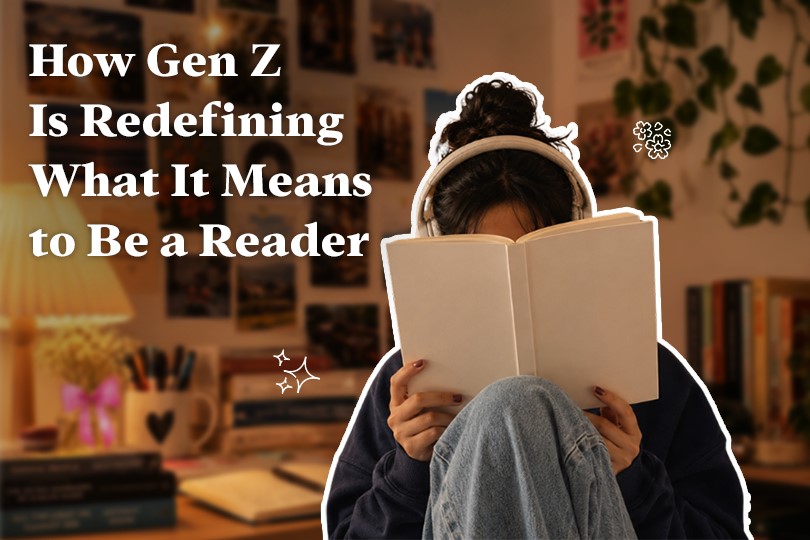
How Gen Z Is Redefining What It Means to Be a Reader
how Gen Z reading habits are changing the way people engage with books. From digital formats to social media influence, explore long form reading habits, evolving trends, and the future of reading industry.on May 07, 2026
What does it mean to be a “reader” today?
For Gen Z, being a reader is no longer defined by how many books you finish in a year or how often you visit a library. It’s about how, where, and why you engage with content,whether that’s a paperback novel, a Wattpad story, a manga series, or even a 60-second BookTok recommendation.
In fact, 61% of Gen Z and millennials consumed a book (print, ebook, or audio) in the last year, yet only 57% identify as “readers”, highlighting a shift from identity to behaviour and evolving Gen Z reading habits.
Key takeaway: Reading is no longer a label. It’s a fluid, multi-format habit.
How often does Gen Z actually read?
Contrary to the stereotype that Gen Z doesn’t read, data tells a different story:
- 55% read at least once a week
- 40% read every day
- 35% are reading more than they did two years ago
This indicates that Gen Z isn’t abandoning reading,it’s expanding its boundaries and reshaping Gen Z reading habits in new ways.
How is Gen Z redefining reading formats?
1. Digital-first, but not digital-only
Gen Z grew up on smartphones, and reading reflects that:
- High engagement with mobile reading, audiobooks, and web fiction
- Platforms like Wattpad and Pratilipi encourage interactive storytelling
But here’s the paradox:
- Print still dominates purchases (up to 80% in some markets)
Insight: Gen Z is format-agnostic. They don’t choose between print and digital,they use both strategically.
2. Short-form meets long-form
Attention spans may be fragmented, but reading hasn’t disappeared,it’s evolved:
- Preference for bite-sized content (flash fiction, threads, summaries)
- Parallel consumption of novels and series, showing continued interest in long form reading habits
This duality reflects a generation comfortable switching between depth and speed.
3. Reading is now social
Gen Z has transformed reading from a solitary act into a community-driven experience:
- BookTok alone has generated billions of views and massive book sales spikes
- 68% discovered books through social media recommendations
- Online book clubs and reading communities are booming in India, often shaping Gen Z book recommendations
Shift: Reading is no longer private,it’s performative, shareable, and conversational.
What does Gen Z want to read?
1. Diversity and representation matter
79% of Gen Z readers prioritise diversity in books. They actively seek:
- Marginalised voices
- Queer narratives
- Global and regional storytelling
This aligns with broader Gen Z values of authenticity and inclusivity.
2. Genre fluidity is the norm
Popular genres include:
- YA (50%)
- Romance (43%)
- Fantasy & sci-fi (42%)
- Horror, webcomics, and fan fiction
Gen Z doesn’t stick to “literary hierarchies”,they read across formats and genres without bias.
Why is Gen Z reading differently?
1. Reading as identity and aesthetic
Books today are:
- Lifestyle objects
- Social media props
- Cultural signals
From annotated copies to curated bookshelves, reading has become part of personal branding.
2. Reading for self-growth, not obligation
Gen Z prioritises:
- Mental health
- Personal development
- Purpose-driven content
They read to understand themselves and the world, not just to complete a syllabus.
3. Reading as escape + resistance
In an era of constant digital noise:
- Print reading offers focus and detox
- Fiction provides emotional escape
This explains the surprising revival of physical books and libraries among Gen Z, even as the future of reading industry becomes increasingly hybrid.
Is Gen Z saving or reshaping the reading culture?
The answer is both.
- They are driving book sales and discovery trends
- They are redefining what counts as reading
- They are forcing publishers to rethink formats, marketing, and content diversity
Crucially: Gen Z is not killing reading,it’s deconstructing and rebuilding it.
What does this mean for the publishing industry?
For publishers, authors, and platfGen Z book recommendations orms, the implications are clear:
- Think beyond the book: content ecosystems matter
- Invest in discoverability: social media is the new bookstore
- Prioritise inclusivity: representation is non-negotiable
- Embrace hybrid formats: audio, digital, print must coexist
These shifts will directly shape the future of reading industry in India and globally.
Final Thought
Gen Z has shifted reading from a habit to an experience,one that is interactive, inclusive, and deeply personal.
The question is no longer “Do they read?”
It’s:
“Are we ready to understand what reading means to them?”
FAQs: Gen Z and Reading Trends
Q1. Do Gen Z still read books?
Yes. Around 55% of Gen Z read weekly, and many consume books across formats like print, ebooks, and audiobooks. While they may not always identify as “readers,” their engagement with content reflects evolving Gen Z reading habits.
Q2. What formats do Gen Z prefer for reading?
Gen Z is format-agnostic. They read across print, digital platforms, audiobooks, and web fiction while maintaining both short-form and long form reading habits.
Q3. How is social media influencing Gen Z reading habits?
Platforms like BookTok and Instagram drive discovery. Nearly 68% of Gen Z readers find books through social media, shaping modern Gen Z book recommendations.
Q4. What genres are popular among Gen Z readers?
Young Adult, romance, fantasy, and manga dominate. However, Gen Z readers are highly experimental and often explore diverse and hybrid genres.
Q5. Why doesn’t Gen Z identify as “readers”?
The definition of reading has expanded. Many Gen Z consumers engage with stories via podcasts, fan fiction, and digital content, which they may not classify as traditional reading.
Post a comment
0 comments
Trending Posts
.jpg)
.jpg)


.jpg)
.jpg)
Recent Post


Related Post
.jpg)
.jpg)
.jpg)

 (1).jpg)
.jpg)

© 2026 - Frontlist - News and Updates of Publishing Industry, Book Reviews, Education News, Author Interviews, and Videos.. All Rights Reserved.
Sorry! No comment found for this post.