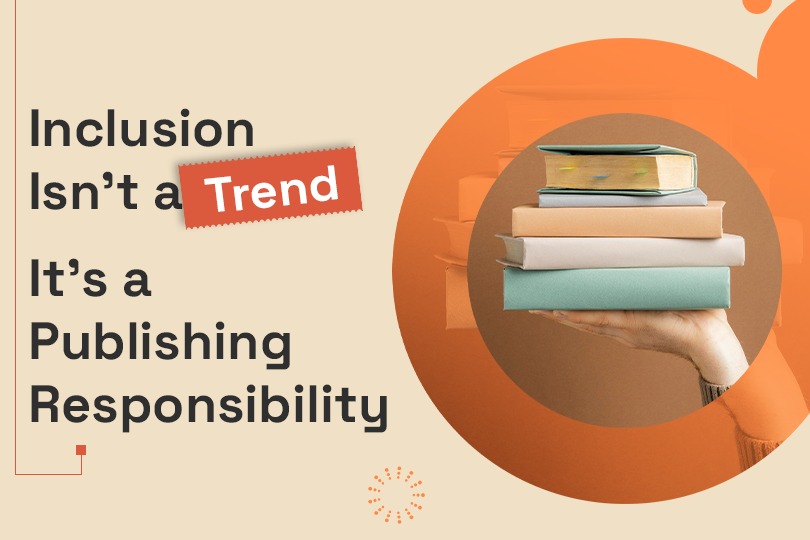
Inclusion Isn’t a Trend - It’s a Publishing Responsibility
Discover why inclusion in publishing is more than a trend. Explore how diverse authors, representation, and inclusive practices are shaping the future of the publishing industry.on Jun 25, 2026
Publishing has always been about stories. But for decades, the question remained: whose stories get told, who gets published, and who gets represented?
Today, inclusion in publishing is no longer a conversation limited to diversity campaigns or seasonal initiatives. It has become a fundamental responsibility for publishers, editors, booksellers, and the entire literary ecosystem.
Readers are asking for authentic voices. Authors from underrepresented communities are demanding visibility. And the industry is recognising that a wider range of perspectives does not only reflect society it strengthens literature itself.
What Does Inclusion Mean in Publishing?
Inclusion in publishing means creating space for diverse voices, experiences, cultures, identities, and perspectives across every stage of the publishing journey.
It includes:
- Publishing authors from different backgrounds
- Supporting translated literature and regional voices
- Creating accessible books for readers with disabilities
- Ensuring diverse representation in editorial teams
- Moving beyond stereotypes in storytelling
True inclusion is not about adding variety for appearance it is about changing who gets the opportunity to shape narratives.
Why Does Representation Matter in Books?
Books influence how people understand themselves and the world around them.
For many readers, seeing a character who reflects their own experiences can create a sense of belonging. For others, reading stories outside their own lived experiences builds empathy and understanding.
According to research by the Cooperative Children’s Book Center (CCBC), books featuring characters from historically underrepresented communities have increased over the years, but representation gaps still remain.
In children’s literature especially, representation matters because early reading experiences shape how young readers understand identity, culture, and society.
Publishing Diversity: The Industry Still Has Work to Do
While conversations around diversity have grown, publishing continues to face challenges.
A 2023 diversity report by the Association of American Publishers highlighted that the publishing workforce continues to work toward greater representation across roles, especially in leadership and decision-making positions.
The challenge is not only publishing more diverse books it is ensuring diverse voices are involved in deciding which stories reach readers.
Because inclusion cannot happen only at the final stage. It must exist from manuscript selection to marketing and distribution.
The Business Case for Inclusive Publishing
Inclusion is not just a social responsibility it is also connected to reader demand.
Modern readers are looking for:
- Authentic storytelling
- New perspectives
- Global narratives
- Fresh literary voices
A diverse publishing catalogue helps publishers reach wider audiences and build stronger connections with readers.
A story does not need to be universal because it removes differences. It becomes universal because readers connect with specific human experiences.
How Publishers Can Build More Inclusive Publishing Practices
1. Expand the Author Pipeline
Publishers can discover new voices by engaging with writers from different communities, regions, and backgrounds.
Traditional networks often limit access. Building wider submission channels creates opportunities for more authors.
2. Invest in Regional and Translated Literature
India, for example, has hundreds of languages and literary traditions. Supporting translations allows readers to discover stories beyond dominant publishing markets.
3. Diversify Editorial Teams
Editors influence which stories are acquired, shaped, and promoted.
A more diverse editorial environment can bring different perspectives into publishing decisions.
4. Avoid Performative Inclusion
Publishing diverse books only during awareness months is not enough.
Inclusion must become part of long-term publishing strategy not a marketing moment.
Why Readers Are Demanding More Inclusive Books
Today’s readers are more aware of representation and authenticity.
They are asking:
- Are these stories told by the right voices?
- Are cultures represented accurately?
- Are marginalized experiences being included beyond stereotypes?
The rise of independent authors, digital publishing, and online reading communities has also created more opportunities for voices that were previously overlooked.
Inclusion in Indian Publishing: A Growing Conversation
Indian publishing has always had a rich tradition of diverse storytelling—from regional literature to oral traditions and contemporary voices.
However, there is still a need for:
- More representation of marginalized communities
- Greater visibility for regional authors
- More translated works
- Wider access to publishing opportunities
The future of Indian publishing depends on how effectively it embraces the full diversity of its readers and writers.
The Future of Publishing Belongs to Every Voice
The publishing industry does not simply preserve stories—it decides which stories enter public memory.
Inclusion is not about following a cultural moment. It is about recognising that literature becomes richer when more voices are heard.
The future of publishing will not be defined by how many stories are published, but by how many different experiences are given the opportunity to be shared.
Inclusion is not a trend. It is the responsibility of publishing.
Frequently Asked Questions
Is inclusion in publishing just a trend?
No. Inclusion in publishing is not a temporary trend. It is a long-term responsibility to ensure that different voices, cultures, and experiences have equal opportunities to be represented.
Why is diversity important in books?
Diversity in books helps readers see different perspectives, creates stronger connections with stories, and builds empathy across communities.
How can publishers become more inclusive?
Publishers can become more inclusive by supporting diverse authors, expanding submission opportunities, investing in translations, and building diverse editorial teams.
Does inclusive publishing benefit the industry?
Yes. Inclusive publishing helps publishers reach wider audiences, discover new talent, and create literature that reflects a changing world.
Post a comment
0 comments

Trending Posts
.jpg)
.jpg)



.jpeg)


.jpg)

Recent Post
.jpg)
.jpg)





Related Post

.jpg)
.jpg)
.jpg)

 (1).jpg)
.jpg)

© 2026 - Frontlist - News and Updates of Publishing Industry, Book Reviews, Education News, Author Interviews, and Videos.. All Rights Reserved.
Sorry! No comment found for this post.