10 Books That Faced Resistance-and Still Shaped History | Frontlist
Discover 10 powerful books that challenged conventions, sparked debate, and reshaped conversations on history, identity, politics, and social justice.on Aug 07, 2026
10 Books That Faced Resistance-and Still Shaped History
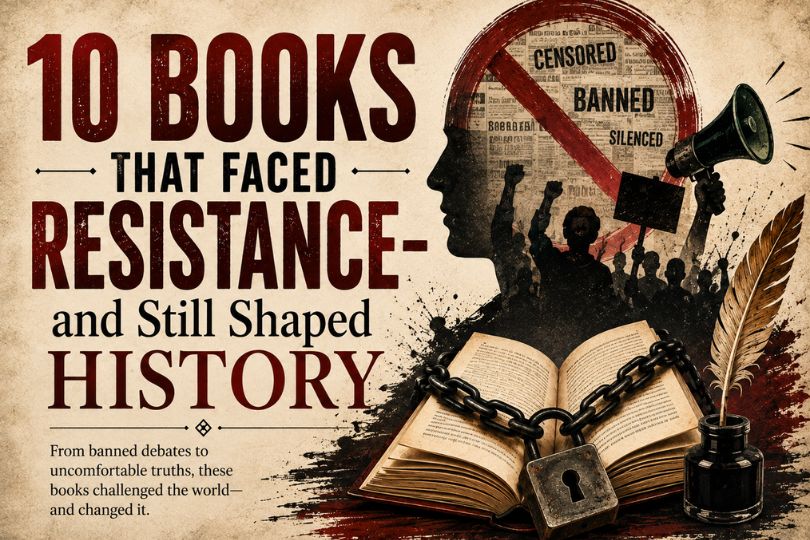
Books have always been more than stories. They preserve history, question authority, challenge prejudice, and inspire social change. Unsurprisingly, some of the world's most influential books have also been the ones that encountered the greatest resistance. Whether through public criticism, ideological opposition, political controversy, or cultural discomfort, these books pushed readers to confront difficult truths.
Resistance does not always mean a formal ban. Sometimes it appears in the form of heated debates, polarized opinions, public outrage, or attempts to suppress uncomfortable conversations. Yet history repeatedly proves that ideas are remarkably resilient. The books that provoke discussion often become the ones that leave the deepest cultural impact.
Here are ten remarkable titles that challenged conventions and continue to shape conversations across literature, history, politics, identity, and society.
1. India that is Bharat: Coloniality, Civilisation, Constitution
One of the most widely debated books in recent years, India that is Bharat revisits India's constitutional identity through the lens of colonial history and civilizational continuity.
Its arguments generated extensive discussions among scholars, legal experts, historians, and political commentators. While some praised the book for questioning established narratives, others strongly disagreed with its interpretations.
Regardless of differing viewpoints, the book has become an important reference point in conversations surrounding India's constitutional evolution and cultural identity.
Why it mattered
- Reopened debates on colonial influence
- Encouraged constitutional discourse
- Sparked nationwide academic discussions
2. The Gay Agenda: A Modern Queer History & Handbook
Few subjects continue to attract as much social resistance as LGBTQ+ rights. The Gay Agenda presents queer history, activism, and identity through an accessible and informative lens.
In societies where conversations around sexuality remain contested, books like this become vital educational resources. Rather than merely documenting history, it celebrates resilience while encouraging inclusivity and understanding.
Why it mattered
- Promotes LGBTQ+ awareness
- Documents queer history
- Challenges stereotypes and misinformation
3. Girl in White Cotton
Winner of international acclaim and later republished globally as Burnt Sugar, this novel unsettled readers with its deeply uncomfortable exploration of motherhood, memory, trauma, and family relationships.
Its refusal to present idealized family structures divided critics while earning praise for its fearless storytelling.
Sometimes resistance comes not from politics—but from confronting emotional realities readers rarely wish to acknowledge.
Why it mattered
- Redefined contemporary literary fiction
- Challenged traditional family narratives
- Received worldwide critical recognition
4. The Female Gaze
For decades, literature and visual culture have largely reflected the "male gaze." This book shifts the perspective by centering women's experiences, agency, and representation.
Its discussions around gender equality, power structures, and cultural representation have made it an important contribution to feminist literature.
Books that change perspectives often face resistance because they question long-standing assumptions—and The Female Gaze does exactly that.
Why it mattered
- Encourages gender-inclusive storytelling
- Questions historical representation
- Expands feminist discourse
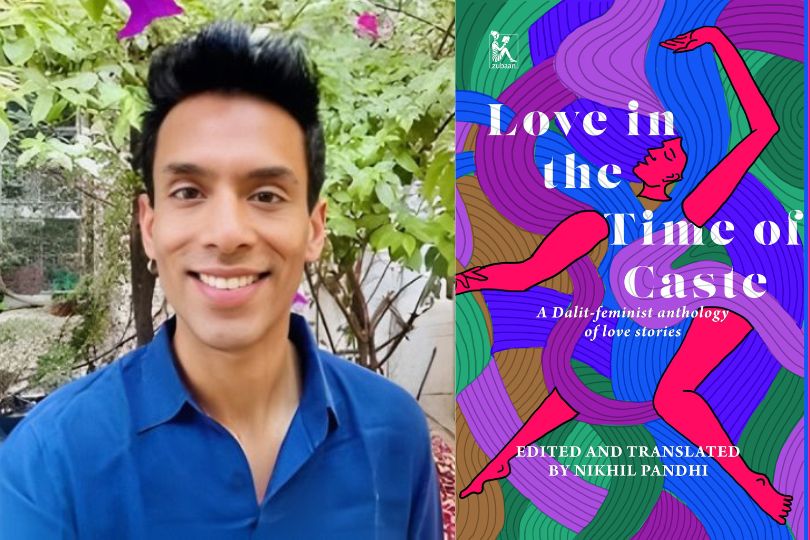
5. Love in the Time of Caste: A Dalit-Feminist Anthology of Love Stories
Love is often portrayed as universal, but this anthology reveals how caste continues to influence relationships across India.
By combining Dalit experiences with feminist perspectives, the book challenges deeply rooted social hierarchies and invites readers to reconsider notions of equality, identity, and belonging.
Its stories are both deeply personal and profoundly political.
Why it mattered
- Highlights marginalized voices
- Challenges caste discrimination
- Brings intersectional feminism into mainstream literature
6. The Identity Project: The Unmaking of a Democracy
Questions surrounding democracy, citizenship, identity, and governance have become increasingly significant in public discourse.
This book explores these themes through political analysis and social commentary, encouraging readers to critically examine democratic institutions and evolving political identities.
Books addressing contemporary politics inevitably attract diverse opinions—and this one is no exception.
Why it mattered
- Examines democratic institutions
- Encourages political literacy
- Stimulates informed civic discussion
7. Guardians of the Republic: Essays on the Constitution, Justice, and the Future of Indian Democracy
This thoughtful collection examines constitutional values, judicial independence, and the future of democratic governance.
Rather than offering simplistic answers, it invites readers into nuanced discussions about justice, accountability, and institutional integrity.
Works that question governance often become central to public discourse because they ask difficult—but necessary—questions.
Why it mattered
- Explores constitutional governance
- Encourages informed citizenship
- Strengthens democratic dialogue
8. Letters from Gaza
Conflict zones often produce stories that challenge dominant narratives.
Letters from Gaza presents deeply human experiences emerging from one of the world's most complex geopolitical conflicts. Regardless of readers' political perspectives, the book reminds us that literature can humanize lives often reduced to headlines.
Its emotional honesty makes it both significant and thought-provoking.
Why it mattered
- Humanizes conflict
- Encourages empathy
- Documents lived experiences
9. Freedom and Despair
History is rarely simple. This work examines the tensions between hope and hardship during periods of political and social upheaval.
Rather than presenting history as a collection of dates and events, it explores how individuals navigate uncertainty, resistance, and change.
Its nuanced perspective encourages readers to reflect on the cost of freedom.
Why it mattered
- Reinterprets historical events
- Explores resilience during conflict
- Encourages historical reflection
10. Kashmir! Kashmir!
Few regions have generated as much political debate and historical complexity as Kashmir.
This book contributes to ongoing conversations by examining the region's history, identity, and evolving realities. Books addressing Kashmir frequently attract intense public discussion because of the issue's political sensitivity.
Yet thoughtful literature remains one of the most important ways to understand complex histories beyond headlines.
Why it mattered
- Explores regional history
- Encourages nuanced dialogue
- Preserves multiple perspectives
Why Books That Face Resistance Often Endure
History repeatedly demonstrates that resistance does not diminish the power of ideas—it often amplifies them.
Books that challenge dominant narratives encourage readers to think independently, question assumptions, and engage with perspectives different from their own. Whether discussing politics, gender, caste, identity, democracy, or history, these works contribute to a richer intellectual culture.
Not every reader will agree with every argument presented in these books, and that is precisely the point. Literature thrives when it encourages conversation rather than conformity.
The books that survive criticism often become the books future generations return to for insight, understanding, and perspective.
Final Thoughts
Throughout history, literature has been one of humanity's most powerful tools for questioning authority, preserving memory, and inspiring change. The books featured here remind us that resistance is often a sign that an idea matters. Whether they challenge political assumptions, social norms, or historical interpretations, these works continue to influence readers long after the debates surrounding them have faded.
In an age of constant information, books that provoke thoughtful discussion remain indispensable. They encourage us not only to read—but to reflect, question, and engage with the world more deeply.
Frequently Asked Questions
Why do some books face resistance?
Books often encounter resistance because they address sensitive political, social, cultural, or historical issues that challenge prevailing beliefs or established narratives.
Are controversial books important?
Yes. Controversial books frequently encourage critical thinking, broaden perspectives, and foster meaningful public discussion, even when readers disagree with their arguments.
Does resistance make a book influential?
Not necessarily, but books that generate thoughtful debate often remain culturally significant because they engage readers in conversations that extend beyond the page.
What themes connect these books?
These books explore identity, democracy, gender, caste, history, constitutional values, human rights, conflict, and social change.
Why should readers explore books with differing viewpoints?
Reading diverse perspectives helps develop critical thinking, encourages empathy, and enables readers to make informed opinions rather than relying on a single narrative.
Post a comment
0 comments

Trending Posts
.jpg)
.jpg)


.jpeg)

.jpg)

Recent Post
.jpg)
.jpg)




Related Post
.jpg)
.jpg)
.jpg)

 (1).jpg)
.jpg)

© 2026 - Frontlist - News and Updates of Publishing Industry, Book Reviews, Education News, Author Interviews, and Videos.. All Rights Reserved.
Sorry! No comment found for this post.