10 Indian Books to Read This Diwali: Stories That Illuminate the Mind and Soul
Celebrate Diwali with 10 Indian books inspired by Rama, Sita and the Ramayana. Explore mythological retellings, stories of devotion, and fresh literary perspectives.on Nov 08, 2026
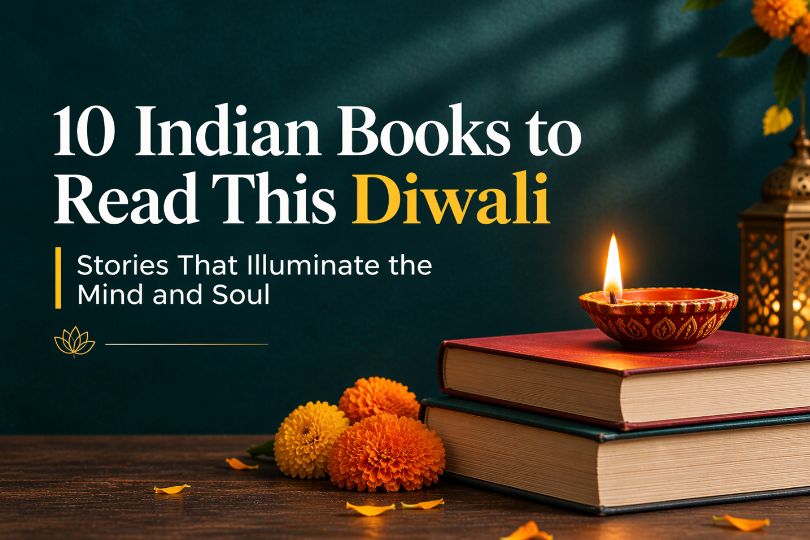
10 Indian Books to Read This Diwali: Stories That Illuminate the Mind and Soul
Diwali is a celebration of light, hope and new beginnings. Across India, homes are illuminated with diyas, families come together, and the story of Lord Rama's return to Ayodhya after fourteen years of exile is remembered with devotion. The festival carries a timeless message: the triumph of good over evil, knowledge over ignorance, and hope over despair.
Beyond the lights, sweets and celebrations, Diwali also offers an opportunity to reconnect with stories that have shaped India's cultural and literary traditions. Books inspired by the Ramayana allow readers to revisit familiar characters, discover overlooked perspectives and explore the deeper meanings of courage, sacrifice, love and righteousness.
Indian authors have continued to reinterpret the Ramayana through novels, poetry, illustrated narratives and contemporary fiction. From Sita's journey and Urmila's sacrifices to Hanuman's devotion and the geographical landscapes associated with Rama's exile, these books reveal how one epic can inspire countless stories.
This Diwali, celebrate the spirit of reading with these ten Indian books that illuminate the world of Rama, Sita and the enduring legacy of the Ramayana.
1. The Book of Ram by Devdutt Pattanaik
Lord Rama's story has been told and retold across generations, but its cultural and philosophical significance continues to invite new interpretations.
In The Book of Ram, Devdutt Pattanaik explores the mythology, symbolism and traditions associated with Rama. His approach encourages readers to look beyond the familiar narrative and consider how the story has been understood across different Indian traditions.
For readers celebrating Diwali, the book provides an opportunity to reflect on Rama's significance and the values associated with his story, including duty, leadership, integrity and righteousness.
Pattanaik's work is particularly relevant for readers interested in the relationship between mythology and everyday life, making it a thoughtful addition to a festive reading list.
Why read it this Diwali? To explore the cultural significance of Rama and reflect on the values that make his story meaningful across generations.
2. Sita's Sister by Kavita Kane
While Sita's story occupies a central place in the Ramayana, the lives of other women in the epic often receive less attention. Kavita Kane's Sita's Sister brings one such character into focus: Urmila, Sita's sister and Lakshmana's wife.
When Lakshmana accompanies Rama into exile, Urmila remains behind in Ayodhya. The novel explores the emotional challenges, responsibilities and sacrifices associated with her life during this period.
Through Urmila's experiences, Kane examines love, loyalty, separation and the often-unrecognised strength of those who support others from the background.
The novel offers a different perspective on the Ramayana, reminding readers that the consequences of a great journey are felt not only by those who undertake it but also by those who remain behind.
Why read it this Diwali? To discover Urmila's story and appreciate the quiet strength, patience and sacrifices that can exist beyond the spotlight.
3. The Missing Queen by Samhita Arni
What happens when an ancient epic becomes the starting point for a contemporary mystery?
In The Missing Queen, Samhita Arni draws inspiration from the Ramayana to create a modern narrative that revisits the epic's cultural legacy. The book moves beyond a conventional retelling, using the enduring presence of the Ramayana in Indian society as a starting point for a story of investigation and discovery.
For readers familiar with the traditional epic, the novel offers an opportunity to consider how ancient stories continue to influence contemporary identities, beliefs and questions.
Its distinctive approach also demonstrates the versatility of Indian mythological storytelling, showing how an epic can inspire narratives that move into new genres.
Why read it this Diwali? To discover a contemporary literary mystery inspired by the Ramayana and explore how ancient stories continue to shape modern storytelling.
4. Sitayana by Amit Majmudar
Sita's experiences form one of the most emotionally powerful threads of the Ramayana. In Sitayana, Amit Majmudar revisits the epic through a narrative that gives particular attention to Sita's journey and the relationships surrounding her.
The book explores the emotional dimensions of the familiar story, including love, separation, suffering and resilience. Through its literary treatment of the epic, it invites readers to engage with the characters beyond their established roles in popular retellings.
Majmudar's work offers a reminder that even stories known across generations can reveal new dimensions when approached through a different narrative focus.
For readers looking to explore Sita's place in the Ramayana, the book provides a literary interpretation that complements more traditional versions of the epic.
Why read it this Diwali? To reflect on Sita's journey and explore the emotional depth of a story that continues to inspire Indian literature.
5. The Liberation of Sita by Volga
What does freedom mean for a woman whose story has traditionally been associated with duty, sacrifice and endurance?
In The Liberation of Sita, Telugu writer Volga reimagines Sita's journey through encounters with other women from the Ramayana. These encounters encourage Sita to examine her experiences, her relationships and her understanding of herself.
Rather than concentrating solely on the familiar sequence of events, the narrative explores questions of independence, identity and personal liberation. It offers a perspective in which self-discovery becomes as important as the external challenges faced by the characters.
The book also highlights the possibilities of feminist reinterpretation in Indian literature, demonstrating how familiar mythological narratives can create space for new conversations.
Why read it this Diwali? To reflect on inner strength, personal freedom and the importance of discovering one's own voice.
6. Sita: A Tale of Ancient Love by Bhanumathi Narasimhan
The relationship between Rama and Sita remains central to the cultural imagination surrounding the Ramayana. In Sita: A Tale of Ancient Love, Bhanumathi Narasimhan revisits their story through a narrative centred on Sita and her relationship with Rama.
The book explores the spiritual and emotional dimensions of their journey, inviting readers to reflect on love, commitment, devotion and the challenges that test relationships.
For readers who approach Diwali as a time for reflection and renewal, the story offers an opportunity to revisit the values associated with one of India's most enduring mythological couples.
It also provides another interpretation of Sita's character, complementing the many literary works that continue to explore her experiences and significance.
Why read it this Diwali? To revisit the story of Rama and Sita and reflect on the enduring themes of love, devotion and resilience.
7. Urmila: The Forgotten Princess by Smriti Dewan
Urmila's place in the Ramayana is often overshadowed by the journeys of Rama, Sita and Lakshmana. Urmila: The Forgotten Princess by Smriti Dewan turns attention towards this less-explored character and the life she leads during a defining period in Ayodhya's history.
The story invites readers to consider the emotional and personal dimensions of Urmila's experiences, particularly her relationship with Lakshmana and the sacrifices associated with his decision to accompany Rama into exile.
By bringing Urmila to the foreground, the novel demonstrates how retellings can expand the boundaries of a familiar epic and explore the lives of characters whose experiences are not always fully developed in popular accounts.
Why read it this Diwali? To discover another perspective on the Ramayana and reflect on the strength required to navigate separation, duty and change.
8. Vanara: The Legend of Baali, Sugreeva and Tara by Anand Neelakantan
The world of the Ramayana extends beyond Rama, Sita and Ravana. Its wider narrative includes the Vanara kingdom and the characters whose stories become intertwined with Rama's quest to rescue Sita.
In Vanara: The Legend of Baali, Sugreeva and Tara, Anand Neelakantan explores the world of Baali, Sugreeva and Tara, bringing their relationships, ambitions and conflicts into focus.
The novel expands the mythological landscape surrounding the Ramayana and provides a different entry point into the epic's broader world. Readers can explore the rivalries and political tensions that shape the characters' lives and influence the events connected to Rama's journey.
For those who enjoy Indian mythology-inspired fiction, the book demonstrates how stories surrounding the central narrative can offer additional layers of meaning.
Why read it this Diwali? To explore the wider world of the Ramayana and discover the characters and conflicts that contribute to its rich narrative tradition.
9. Hanuman's Ramayana by Devdutt Pattanaik
Hanuman's devotion to Rama is among the most enduring elements of the Ramayana. His courage, humility and unwavering commitment have made him a beloved figure in Indian storytelling.
In Hanuman's Ramayana, Devdutt Pattanaik presents an illustrated interpretation that explores the epic through Hanuman and his relationship with Rama.
The book offers a distinctive way to engage with the Ramayana, combining visual storytelling with a perspective centred on devotion and the act of remembering a story. Its format can also appeal to younger readers and those who enjoy illustrated books.
Hanuman's role in the larger epic offers an opportunity to reflect on service, loyalty and the power of devotion in the face of difficult challenges.
Why read it this Diwali? To celebrate Hanuman's devotion and rediscover the values of courage, humility and selfless service.
10. In the Footsteps of Rama by Vikrant Pande and Neelesh Kulkarni
The Ramayana is not only a literary and spiritual epic; it is also connected with places, landscapes and cultural traditions across the Indian subcontinent.
In the Footsteps of Rama by Vikrant Pande and Neelesh Kulkarni takes a travel-oriented approach to the story, tracing places associated with Rama, Sita and Lakshmana during their exile.
By connecting the narrative with geography and local traditions, the book offers readers another way to engage with the epic. It encourages them to consider how stories are preserved through places, pilgrimage routes and cultural memory.
For readers interested in travel as well as literature, this book broadens the experience of the Ramayana beyond the printed page.
Why read it this Diwali? To explore the geographical and cultural dimensions of Rama's journey and discover how literary traditions remain connected to real places and communities.
This Diwali, Let Books Illuminate Your World
Diwali celebrates the victory of light over darkness and reminds us of the enduring importance of hope, knowledge and righteousness. The Ramayana embodies many of these themes, offering stories that continue to inspire readers, writers and artists across generations.
The ten books featured here approach that legacy from different directions. The Book of Ram explores Rama's cultural significance, while Sita's Sister, Sitayana and The Liberation of Sita bring attention to different dimensions of women's experiences within the epic. Hanuman's Ramayana celebrates devotion, Vanara expands the narrative to other characters, and In the Footsteps of Rama connects the story with India's geographical and cultural landscape.
Together, these works demonstrate that the Ramayana is not a single story confined to the past. It is a continuing literary tradition that invites fresh interpretations, thoughtful questions and new discoveries.
This Diwali, consider adding one of these books to your reading list or gifting it to someone who appreciates Indian mythology and literature. Amid the festivities, a few quiet moments with a book can offer a different kind of celebration - one that nurtures curiosity, encourages reflection and brings new perspectives into our lives.
May this Diwali illuminate your home, enrich your mind and inspire you to discover stories that stay with you long after the celebrations end. Happy Diwali from Frontlist!
Post a comment
0 comments

Trending Posts









Recent Post


Related Post

.jpg)
.jpg)
.jpg)

 (1).jpg)
.jpg)

© 2026 - Frontlist - News and Updates of Publishing Industry, Book Reviews, Education News, Author Interviews, and Videos.. All Rights Reserved.
Sorry! No comment found for this post.