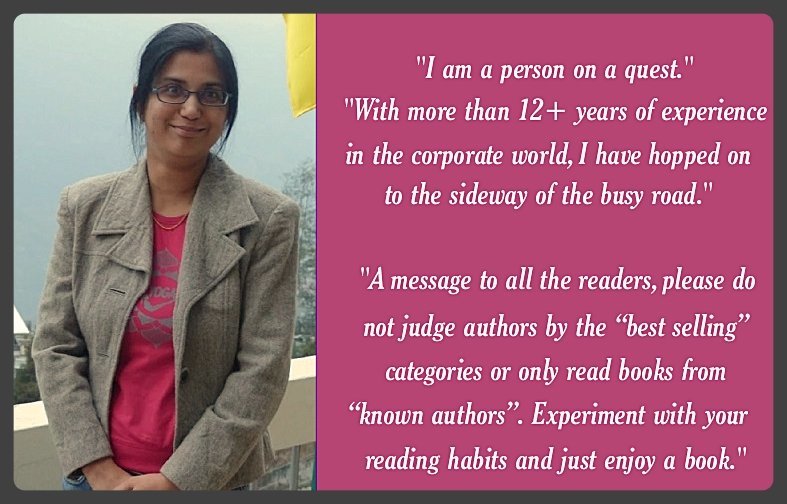
Interview with Naumita Rishi, Author of Feelings Decoder!
CBT therapist Naumita shares how Feelings Decoder! helps children understand emotions through stories and interactive missions.on May 08, 2026
.jpg)
Frontlist: Feelings Decoder! transforms emotional learning into a “secret agent mission” what inspired this creative approach to engage “The Reader of Tomorrow”?
Naumita: In my work as a CBT therapist, I often meet individuals who struggle with managing even their everyday emotional and behavioural reactions. That always made me pause and think, what if we could equip children with these skills much earlier in life? Perhaps they would not feel as overwhelmed later, or at least be better prepared to handle daily challenges.
The next question for me was how to make this possible in India, where Conversations around mental health are still growing and often met with resistance. While exploring this, I came across several international resources, especially from the US, where children are gently introduced to understanding even complex emotions like grief. That made me reflect on the gap we have and the opportunity it holds.
I realised that children do not learn through instructions alone. They learn best when they can see themselves in the process and actively participate in it. This is where the idea of the “secret agent mission” came in.
When a child steps into the role of an agent, something shifts. They are no longer taught what to feel or do. Instead, they are observing, decoding, and working through emotions themselves. This sense of identity makes the process engaging, non-threatening, and even exciting. Through this approach, they are not only learning about everyday emotions but also building the confidence to navigate more complex and tricky feelings.
Frontlist: As a CBT therapist, how did your real-life work with children influence the Design of the activities and storytelling in this workbook?
Naumita: Through my work, especially while conducting experiential workshops for children, I have consistently seen how deeply children engage when learning is interactive and experience-based. They do not just listen, they participate, reflect, and internalise. Many parents have also shared noticeable changes in their children’s behaviour after these sessions, which further reinforced my belief in this approach.
At the same time, working with children also showed me something important: they often find it difficult to directly talk about their emotions, especially when they feel they are being questioned or observed. But when the same ideas are presented through stories or situations, they naturally open up. They begin to see themselves in the characters and engage without hesitation.
However, workshops come with their own limitations. They are time-bound and cannot always be repeated frequently. Over time, children naturally get absorbed in their daily routines, and there is a possibility that what they learned may not stay active in their awareness.
That led me to an important question. How can I create something that stays with the child beyond the session?
The answer was the workbook.
I wanted to design something that children could return to, practice with, and reflect on at their own pace. While designing it, I drew from core CBT principles, especially helping children notice the connection between their thoughts, feelings, and actions in a simple and accessible way.
This is where the combination of storytelling and experiential activities becomes central. Instead of presenting emotions as an abstract concept, I structure the book as a journey where children actively decode situations, observe their thoughts, and understand how these shape their emotional and behavioural responses.
The mission, story-based decoding, and tools like the Thought-recorder are all inspired by how children naturally respond in real-life settings. When they are involved in doing, rather than just being told, the learning becomes more meaningful and lasting.
Frontlist: The book introduces young readers to the connection between thoughts, feelings, and actions. How did you simplify such a core CBT concept for children aged 4–10?
Naumita: CBT is a research-based and structured approach, and at its core is the understanding of how our thoughts, feelings and behaviours are connected. Even with adults, we rarely explain this as a theory alone. We use examples because that is how people truly begin to see these patterns in their lives.
I followed the same principle while designing this for children, but with an added layer of simplicity and relatability.
One of the challenges with younger children is that thoughts are not something they can easily describe. So instead of presenting the concept in an abstract way, I used simple, everyday examples that they could connect with. Along with words, I also used visual elements, because children often understand and retain better when they can see what is being explained. The structure of the book gently builds this understanding. In the mission sections, children are introduced to different emotions in a more detailed yet accessible way, again supported by visuals. Then, through stories, they begin to observe what a character might be thinking, feeling, and doing. The exercises that follow allow them to take this a step further, not just observing, but applying it to situations. This helps them experience the connection rather than just memorising it.
I was also very mindful of keeping the language simple and not overwhelming them with technical terms. The intention was not to teach CBT as a concept, but to help children naturally start noticing patterns in their own thoughts, feelings and actions in a way that feels intuitive and approachable.
Frontlist: Emotional intelligence is becoming essential in today’s world how do you see this workbook shaping more self-aware and emotionally resilient young readers?
Naumita: I believe emotional regulation is not just a modern need. It has always been a part of our cultural fabric. In many ways, it was woven into everyday life. Simple practices like following a routine, praying, expressing gratitude before meals, or even small rituals like washing up and changing after coming home all played a role in helping individuals regulate themselves.
We have also had long-standing traditions like yoga and meditation, and the practice of storytelling, where children learned about emotions, choices, and consequences in a natural and indirect way.
However, in today’s fast-paced and highly competitive environment, many of these practices have gradually taken a back seat. Children’s lives have become more structured and demanding, often leaving less space for free play, reflection, and organic learning. Earlier, children would learn a great deal about emotions and relationships simply through interacting with other children in unstructured settings. That space has reduced significantly. While we may not be able to go back to those times, we can certainly adapt to the needs of the present.
This is where I see resources like my workbook playing an important role. It offers children a space to pause, reflect, and understand themselves in a way that fits into their current lives. Through guided activities, stories, and structured reflection, they begin to recognise their emotions, understand their thoughts, and respond with greater awareness.
For me, emotional resilience is not about avoiding difficult feelings, but about developing the ability to understand, sit with, and navigate them. If a child can begin to do that early in life, they carry with them a quiet confidence, a sense of awareness, and the ability to respond rather than react, which can shape not just how they handle challenges, but how they relate to themselves and the world around them.
Frontlist: The interactive missions make the book highly engaging. How important was it for you to create an active, hands-on experience rather than a traditional reading format?
Naumita: Not just children, even as adults, we learn and retain better when we actually do something ourselves. Think about something like baking a cake. You can read the recipe and understand the process, but when you actually make it, that is when the learning becomes real. You remember it not just because you read it, but because you experienced it.
When we do something ourselves, we are not just following instructions. We are also thinking, problem-solving, making small decisions, and sometimes even finding better ways to do things; that is where real learning happens.
The same applies to children.
If emotional learning is only presented as something to read or listen to, it may make sense in the moment, but it does not always stay. I wanted to move away from that passive format and create something where children are actively involved in the process.
That is why the concept of mission becomes central to the workbook. When a child approaches an activity as a mission, there is a natural sense of curiosity and engagement. They are not just completing a task; they are exploring, observing, and figuring things out for themselves.
I also wanted to create space for parents to be a part of this journey. When parents engage with the activities alongside their child, it opens up conversations and shared understanding, allowing the learning to extend beyond the page and into everyday life.
I did not want this to be a book that a child simply reads and finishes. I wanted it to be something they interact with, return to, and grow through. When children write, reflect, and work through situations on their own, and sometimes with the support of a parent, they begin to understand their emotions at a deeper level. This kind of hands-on experience helps the learning stay with them, making it more meaningful and more likely to be used in real-life situations.
Frontlist: Many children struggle to express “big and tricky feelings” like anxiety or jealousy how does your book help normalise and navigate these emotions?
Naumita: For children, these emotions can feel confusing or even wrong, especially if they sense that certain feelings are not acceptable to express. Over time, this can lead to their suppressing emotions or reacting without fully understanding them. I wanted to create a space where these feelings are gently normalised.
One important part of this process is involving parents. In the workbook, I have included examples and prompts that parents can engage with alongside their child. When children see their parents acknowledging and talking about similar emotions, it creates a sense of safety. It helps them realise that these feelings are a natural part of being human.
At the same time, the focus is not just on feeling, but on responding.
Children are guided to understand that while emotions may arise automatically, how we respond to them is something we can become aware of and gradually learn to manage. This helps shift the experience from confusion or judgment to understanding and choice.
The interaction is not to remove difficult emotions, but to help children feel less alone in them, and more capable of navigating them with awareness and support.
Frontlist: In a digital-first world where attention spans are shrinking, what strategies did you use to ensure children remain engaged while also reflecting deeply?
Naumita: In today’s world, children are exposed to a lot of fast-paced and stimulating content, which naturally affects their attention span. They are used to quick shifts, visual engagement, and constant input. The challenge, however, is not just to capture their attention, but to help them slow down and reflect. While designing the workbook, I was very mindful of this balance. One of the key things I focused on was removing pressure. There is no expectation for a child to complete the workbook in one go. They can move at their own pace, even engaging with a single page at a time. The idea is that even a small interaction can spark thought and reflection.
At the same time, I created an engaging structure around it. The agent induction process gives children a sense of entering a mission, something exciting and purposeful. This immediately draws them in and builds curiosity.
The content itself is designed with variety. There are simple examples, visuals, short exercises, and relatable stories, so the child is not engaging with the same format repeatedly. This helps maintain attention while gradually deepening their understanding.
Elements like missions, a badge, a certificate, and a personal toolbox at the end give a sense of progress and ownership. It becomes not just an activity, but a journey they are a part of. For me, engagement brings them in, but reflection is what helps the learning stay. The intention was to create something that feels light and engaging on the surface, but gently encourages the child to pause, think, and connect with their inner experiences in a meaningful way.
Frontlist: If “The Reader of Tomorrow” completes this workbook, what is the one emotional skill or mindset you hope they carry into their everyday life?
Naumita: If I had to choose one thing, it would be this: that a child begins to understand that their emotions are important, but they are not something to be feared or controlled blindly. They can be noticed, understood, and responded to with awareness.
Through the workbook, children learn to identify a wide range of emotions, not just by name, but by recognizing how they experience them in their body and mind. They begin to notice their thoughts, especially the unhelpful ones, and slowly understand the difference between reacting automatically and choosing a response.
They are also introduced to simple yet powerful cognitive, emotional, behavioural, and physiological tools that they can use in their everyday life. But beyond all of this, the deeper shift I hope for is that they start relating to themselves with more awareness and less confusion. If a child carries even this one understanding, that they can pause and choose how to respond, it can quietly shape how they handle challenges, relationships, and their own inner world as they grow.
Post a comment
0 comments

Trending Posts
.jpg)
.jpg)



.jpeg)


.jpg)

Recent Post
.jpg)
.jpg)






Related Post




© 2026 - Frontlist - News and Updates of Publishing Industry, Book Reviews, Education News, Author Interviews, and Videos.. All Rights Reserved.
Sorry! No comment found for this post.