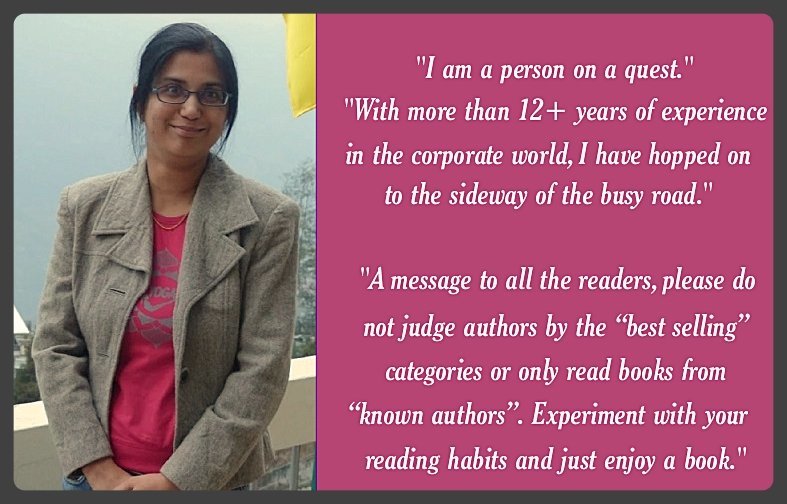
Interview with Sumitra Manda, Author of I Died Too Early
Interview with Sumitra Manda as she discusses I Died Too Early, healing, heartbreak, womanhood, emotional vulnerability, and the journey from LinkedIn creator to published author.on Jul 15, 2026
.jpg)
Frontlist: I Died Too Early opens with the line "I died in pieces." Was there a specific moment in your life when you felt that fracturing - or is this a feeling that accumulated quietly over years?
Sumitra: It accumulated over years. Looking back, I don't think most people break because of one event. We break because life keeps asking us to become someone new before we've had the chance to mourn who we were before.
There were heartbreaks, betrayals, disappointments, and the experience of leaving home and learning how lonely independence can be. But more than any individual event, it was the way those experiences changed me. Every loss took something with it. A belief. A certainty. A version of myself.
The line "I died in pieces" came from that realization. Not that my life ended, but that many versions of me did. The girl who believed love could fix people. The girl who thought being there for everyone was her responsibility. The girl who trusted too easily. They all disappeared at different points, and each loss required its own grief.
Frontlist: The book sits at the intersection of poetry and reflection rather than pure verse. How did you decide what deserved a poem and what deserved prose? Do some emotions simply refuse to be contained in one form?
Sumitra: I never decided intellectually. The emotion decided for me. Some experiences arrived as images. A room. A silence. A memory I couldn't stop revisiting.
Those often became poems. Others arrived as questions. Why do we stay where we are hurting?
Why do we confuse being needed with being loved? Why do we keep abandoning ourselves for people who would never do the same for us? Those questions needed more space, so they became prose.
I think poetry captures the feeling of an experience, while prose allows me to sit with it and understand it. For me, the two forms were often having different conversations about the same wound.
Frontlist: Healing in your book is described as slow and blooming - not dramatic. In a world that celebrates "glow-up" narratives and overnight transformation, was it a conscious choice to resist that and write healing as something fragile and unglamorous?
Sumitra: Yes, because that's how healing has actually looked in my life.
I think we have romanticized healing. We imagine dramatic turning points and grand realizations. But most of the growth I've experienced came from very ordinary moments. Learning not to send a message. Learning to sit alone without distracting myself. Learning that closure isn't always something another person gives you.
The hardest lesson was realizing that healing is often invisible while it's happening. You don't wake up one morning transformed. You simply notice one day that something which used to consume you no longer has the same power over you. That kind of healing felt far more honest to write about than any transformation story.
Frontlist: You write about childhood wounds and growing up too fast. How difficult was it to go back to that younger version of yourself - and did writing these poems feel like protection or exposure?
Sumitra: Both.
My parents loved me deeply, but we were never a family that spoke openly about emotions. There were many things I carried alone because I didn't know how to express them, and perhaps they didn't know how to ask. I think a lot of people grow up in loving homes where emotional conversations are still missing.
Going back to that younger version of myself was difficult because I could see how much she was feeling and how little language she had for it. Writing felt exposing because I had to revisit emotions I had spent years trying to move past. But it also felt protective because I was finally giving that younger version of myself something she never had at the time: Words.
Frontlist: Many readers say your work made them feel "seen" and "less alone." When you were writing, were you writing for a reader - or were you writing to save yourself first?
Sumitra: I was writing to understand myself.
I've always been someone who thinks deeply about things, sometimes to my own detriment. I replay conversations. I analyze situations long after they're over. I hold onto questions longer than I should. Writing became a way of untangling all of that.
Most of these pieces were never written with publication in mind. They were written because my thoughts had nowhere else to go. The book came much later.
What surprised me was realizing how many people carried the same questions. The same grief. The same self-doubt. I think people feel seen by these poems because the emotions themselves are not unique. We just don't talk about them honestly enough.
Frontlist: The book traces womanhood as one of its central threads. What do you think women carry in silence that we still don't have enough language for - and did writing this book help you find some of those words?
Sumitra: I think many women carry the exhaustion of constantly adjusting.
Adjusting how they speak, how they behave, what they want, what they say yes to, what they say no to. There is often an invisible pressure to make other people comfortable, even when it comes at the cost of your own comfort.
Something that has always frustrated me is how quickly women are labelled difficult when they have strong opinions or refuse to shrink themselves. Sometimes that judgment comes from men, but sometimes it comes from women too. I think many of us have inherited expectations that we never stopped questioning.
Writing this book gave me a place to examine those expectations. It allowed me to ask where they came from and whether they deserved the power we give them.
Frontlist: Mid-year is a natural pause - a moment to look back at who we were in January and ask hard questions. If a reader picks up I Died Too Early right now, in June, what do you hope it unlocks in them?
Sumitra: I hope it helps them be a little kinder to themselves.
One of the things I have learned is that people are often harsher on themselves than they would ever be on someone they love. We judge ourselves for feeling too much, caring too much, grieving too long, struggling to move on.
If someone closes this book feeling less alone, then I think it has done its job. More than anything, I want readers to understand that being emotional does not make them dramatic. Feeling deeply does not make them difficult to love. It makes them human.
Frontlist: You began as a LinkedIn content creator writing about business and personal growth. There's a striking distance between that world and the emotional rawness of this book. What crossed over - and what did you have to leave behind to write this honestly?
Sumitra: People are often surprised when they hear that I write both business content and poetry, but to me they were never complete opposites. At the heart of both is the same thing: people.
Over the years, I worked with startups, founders, and professionals who had achieved many of the things society tells us to chase. Success. Recognition. Stability. On the surface, a lot of them seemed to have everything figured out. But when you spend enough time observing people, you realize how little our external lives reveal about our internal ones.
I met people who were successful but lonely. Confident but deeply insecure. Surrounded by people but emotionally isolated. It made me realize that no amount of achievement protects us from being human.
We still grieve. We still doubt ourselves. We still carry wounds that no promotion, relationship, or milestone can fully heal.
I think that realization found its way into my poetry. What I had to leave behind was the idea that every piece of writing needs to provide answers. Professional writing often rewards clarity, certainty, and solutions. Poetry asks something different of you. It asks you to sit with uncertainty. To ask questions without immediately trying to solve them. To stay with a feeling long enough to understand it.
For me, I Died Too Early was born from that space. A space where I wasn't trying to teach, advise, or persuade anyone. I was simply trying to be honest about what it means to be human.
Post a comment
0 comments

Trending Posts
.jpg)
.jpg)


.jpeg)
.jpg)
Recent Post
.jpg)
.jpg)




Related Post


© 2026 - Frontlist - News and Updates of Publishing Industry, Book Reviews, Education News, Author Interviews, and Videos.. All Rights Reserved.
Sorry! No comment found for this post.