The Mindful Engineer: Structural Stress Management for the Urban Professional
A review of Brijesh Srivastava’s The Mindful Engineer, exploring its practical mindfulness framework for managing stress, digital overload, and pressure in modern urban professional life.on Aug 14, 2026
.jpg)
The Mindful Engineer: Structural Stress Management for the Urban Professional
In a professional world increasingly defined by deadlines, digital overload, long commutes, back-to-back meetings, and constant availability, stress has become less an occasional disruption and more a persistent structural load. The Mindful Engineer: Structural Stress Management for the Urban Professional by Brijesh Srivastava offers an unusual and highly practical way of looking at this problem. Rather than approaching mindfulness through conventional spiritual or meditative language, Srivastava borrows from engineering to propose that the human mind, much like any structure, requires monitoring, maintenance, and resilience.
The book’s central metaphor is both distinctive and effective: if engineers routinely assess structures for load, fatigue, stress, and resilience, why should the same principles not be applied to the mind? For professionals operating in demanding urban environments, this perspective makes mindfulness feel less like an abstract wellness practice and more like a practical component of professional performance.
Mindfulness Re-engineered for the Working Professional
One of the book’s strongest features is its refusal to assume that the reader has abundant time or access to ideal conditions. Traditional meditation practices can sometimes appear difficult to integrate into the schedule of a professional already struggling to find a few uninterrupted minutes. Srivastava addresses this directly through the Mindful Engineer Framework, which focuses on short, tactical protocols designed to take less than five minutes.
The approach is particularly relevant to the realities of the urban Indian workplace. The book recognises that stress can accumulate through seemingly ordinary experiences: a congested commute, an overflowing inbox, incessant notifications, difficult meetings, or the mental pressure of constantly preparing to respond. Instead of asking readers to escape these environments, the framework encourages them to use these everyday situations as opportunities to practise attention and regulate their responses.
This is an important shift in perspective. Mindfulness is presented not as withdrawal from professional life, but as a skill that can operate within it.
From Infrastructure to Internal Infrastructure
Srivastava’s professional background adds credibility and personality to the book’s conceptual framework. An IIT Roorkee alumnus with more than three decades of experience in large-scale infrastructure development, he understands the vocabulary of structural integrity not as an analogy borrowed for effect, but as a language he has worked with throughout his career.
The book extends concepts such as load, fatigue, resilience, maintenance, and failure into the psychological domain. The result is a framework that will likely resonate particularly strongly with engineers, architects, managers, project leaders, and other professionals accustomed to thinking systematically about problems.
The idea of “internal infrastructure” is perhaps the book’s most compelling conceptual contribution. Just as physical infrastructure requires regular inspection and maintenance before small weaknesses become major failures, cognitive and emotional resilience also benefit from consistent attention. The emphasis is therefore on preventive maintenance rather than crisis management.
Practicality Over Perfection
The book distinguishes itself through its emphasis on usability. Its proposed exercises—including breathing protocols, commute-based practices, and short attention-reset techniques—are designed around the constraints of contemporary professional life.
The “Panic Button” breathing protocols are a particularly accessible example of this philosophy. Instead of requiring elaborate preparation, the practices are intended to provide an immediate intervention when pressure begins to rise. Similarly, the suggestion to “retrofit” the commute transforms an otherwise frustrating part of the day into an opportunity for intentional attention.
This tactical approach makes the book less prescriptive than many conventional mindfulness guides. Readers are not asked to completely redesign their lifestyles. Instead, they are encouraged to build small practices into the architecture of their existing routines.
That makes The Mindful Engineer particularly relevant for readers who may be interested in mindfulness but resistant to practices that seem time-consuming, overly spiritual, or disconnected from workplace realities.
A Strong Urban Indian Context
Another notable strength is the book’s grounding in contemporary Indian professional life. References to the Delhi-Gurugram commute, digital communication, workplace meetings, and the pressures of highly connected professional environments make the discussion feel immediate rather than generic.
The book understands that modern stress is often cumulative. There may be no single dramatic event responsible for exhaustion; instead, it is the result of repeated small pressures accumulating over days, weeks, and months. This is where the engineering metaphor becomes particularly useful. Individual stressors may seem manageable, but their cumulative effect can eventually compromise performance and resilience.
By framing attention and recovery as forms of maintenance, Srivastava provides readers with a vocabulary for recognising this accumulation before it reaches a critical point.
Where the Book Stands Out
The strongest aspect of The Mindful Engineer is its translation of mindfulness into an operational framework. Rather than simply discussing the importance of being present, the book asks a more practical question: How can a busy professional actually practise presence when the environment is noisy, demanding, and unpredictable?
Its answer is to work with the environment rather than against it.
The metro becomes a potential training ground. The elevator can become a moment for resetting attention. The meeting room can become an opportunity to observe rather than immediately react. In this sense, the book democratises mindfulness by removing the requirement for perfect circumstances.
There is also a refreshing lack of grand promises. The framework is presented as a set of practices and habits rather than a magical solution to workplace stress. This practical tone aligns well with the author's engineering background and gives the book a distinctive identity within the broader mindfulness and professional-wellness space.
Who Should Read This Book?
The Mindful Engineer will be particularly useful for professionals working in high-pressure, deadline-driven environments. Engineers, managers, consultants, architects, entrepreneurs, executives, and project leaders are likely to find the book’s language and methodology especially relatable.
It can also appeal to readers who have previously struggled to connect with conventional meditation literature. Those looking for short, actionable techniques rather than extended contemplative practices may find the book easier to incorporate into daily life.
For young professionals navigating increasingly connected workplaces, the book offers an additional lesson: productivity is not simply about managing time and completing tasks. It also depends on maintaining the cognitive capacity required to make sound decisions under pressure.
Final Verdict
The Mindful Engineer: Structural Stress Management for the Urban Professional presents mindfulness through an uncommon but remarkably accessible lens. Brijesh Srivastava takes concepts familiar to the world of engineering—load management, fatigue, resilience, maintenance, and structural integrity—and applies them to one of the most pressing challenges of modern professional life: cognitive and emotional overload.
Its greatest strength lies in its practicality. Rather than asking readers to step away from the realities of urban professional life, the book shows how those realities themselves can become opportunities to develop greater awareness and composure.
For anyone who has ever felt that finding time to manage stress has itself become another source of stress, The Mindful Engineer offers a compelling alternative: do not wait for ideal conditions; engineer small moments of resilience into the conditions you already have.
About the Author
.jpg)
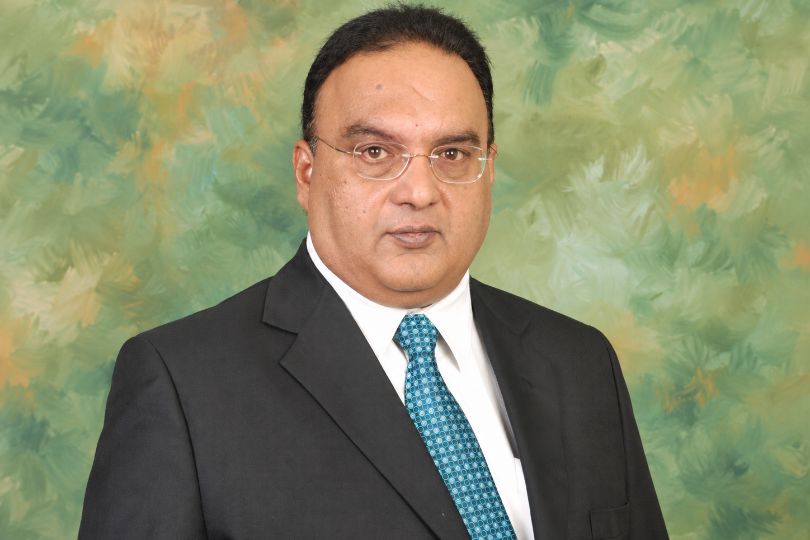
Brijesh Srivastava: Infrastructure Leader and Author of The Mindful Engineer
Brijesh Srivastava is an IIT Roorkee alumnus and veteran infrastructure professional who brings engineering logic to the challenges of stress, focus and cognitive resilience.Brijesh Srivastava is an infrastructure leader, author and IIT Roorkee alumnus with more than 36 years of experience in large-scale public development. He spent a significant part of his career with RITES Ltd., a multidisciplinary engineering and consultancy organisation under the Government of India, where he rose to the position of General Manager.His professional journey has covered building construction, railway infrastructure, industrial projects and large-scale programme management. He has worked…
Read more about Brijesh Srivastava: Infrastructure Leader and Author of The Mindful Engineer →Post a comment
0 comments

Trending Posts
.jpg)
.jpg)



.jpeg)


.jpg)

Recent Post
.jpg)
.jpg)





Related Post






© 2026 - Frontlist - News and Updates of Publishing Industry, Book Reviews, Education News, Author Interviews, and Videos.. All Rights Reserved.
Sorry! No comment found for this post.