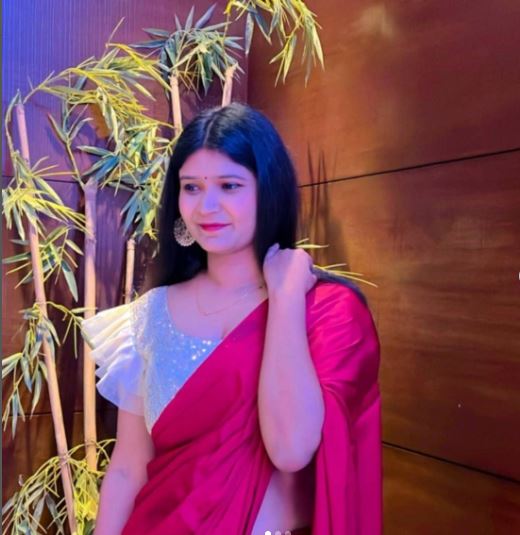
Interview with Agnimitra, Author of Journey Beyond the Journey
Agnimitra discusses Journey Beyond the Journey, exploring travel, OCD, addiction, loneliness, relationships and the inner journey towards self-discovery.on Oct 08, 2026
.jpg)
Frontlist: The title Journey Beyond the Journey suggests travel as both literal and metaphorical. How did you decide to use the Andaman Islands specifically as the backdrop for such an internal, psychological story?
Agnimitra: The Andaman Islands have always represented something special to me. They are geographically distant from mainland India, surrounded by the sea, and yet they are incredibly beautiful and peaceful. That contrast fascinated me.
I wanted the setting to reflect the protagonist's inner world. On the outside, he is surrounded by beaches, forests and the tranquillity of the islands, but internally, he is dealing with OCD, addiction, loneliness and unresolved emotional struggles. The contrast between the peaceful surroundings and the turbulence inside his mind became an important part of the story.
For me, the journey to the Andamans is therefore only the beginning. The real journey happens within the characters. That is where the title Journey Beyond the Journey comes from.
Frontlist: This is your debut book, and it tackles deeply personal themes like OCD, addiction, and stammering. How much of the protagonist's internal battles draw from your own experiences or people close to you?
Agnimitra: The book is a work of creative non-fiction, but the protagonist is a fictional character. While the story and character are fictionalised, the emotions, observations, and psychological experiences explored in the book are rooted in real-life realities.
Some experiences, observations, and emotions I have encountered in life influenced the way I understood and portrayed the characters. I didn’t want to simply create characters who “have problems”; I wanted to explore what it actually feels like to live with them: the repetitive thoughts and compulsions associated with OCD, the psychological pull of online fantasy sports addiction, the hesitation and anxiety that can accompany stammering, and the loneliness that can exist even when someone is surrounded by people.
So, while the protagonist is not a direct representation of me, parts of his emotional journey were shaped by my observations of life and people around me. I think that is one of the strengths of creative non-fiction: it allows a writer to fictionalise a character and construct a story while remaining emotionally truthful to the realities being explored.
In that sense, the character is fictional, but the emotions behind his journey are very real. I believe every writer leaves a little bit of themselves in their characters, even when those characters are not autobiographical.
Frontlist: You describe yourself as a traveller who has journeyed extensively across India and solo to Sri Lanka. How did your own solo travel experiences shape the way you wrote about loneliness and self-discovery in the book?
Agnimitra: Travel has been one of the biggest influences on my writing. I have travelled extensively across India and also travelled solo to Sri Lanka. My Google Maps travel record currently shows 1,452 places visited, which gives some sense of how deeply travel has become a part of my life.
But for me, travelling has never been only about collecting destinations. Every journey has given me an opportunity to observe people, places, cultures and, most importantly, myself. Some journeys have been exciting, while others have been quiet and introspective.
Solo travel particularly taught me that loneliness and solitude are not the same thing. When you travel alone, there are moments when you have nobody else to distract you from your thoughts. You are forced to sit with yourself, make decisions on your own and become comfortable with your own company.
That experience influenced Journey Beyond the Journey significantly. The physical journey in the book represents something much larger - the journey within oneself. You can travel thousands of kilometres and still remain emotionally stuck. Similarly, you don't necessarily need to travel far to discover something profound about yourself.
My travels taught me that sometimes the most important destination isn't a place on the map - it is a better understanding of yourself.
Frontlist: The book portrays a couple entering marriage after meeting on a dating app, each carrying their own unresolved struggles. What drew you to this modern, often-unspoken reality rather than a more conventional love story?
Agnimitra: Because this is the reality of many people today.
Dating apps have changed how relationships begin, but they haven't changed the complexity that people bring into relationships. Two people can meet online, feel connected, decide to marry, and still discover that they are carrying emotional baggage that they haven't completely dealt with.
I wanted to explore what happens after the "match", when real life begins.
Instead of presenting marriage as the final destination of a romantic story, I wanted to ask a different question: Can two people build a healthy relationship when they are still struggling with their own unresolved battles?
That felt much more relevant and honest to me than writing a conventional love story.
Frontlist: Depicting OCD and fantasy sports addiction with authenticity requires care and research. What kind of process did you go through to portray these conditions responsibly rather than reducing them to plot devices?
Agnimitra: I was very conscious that these themes shouldn't become mere dramatic devices.
With OCD especially, there is a tendency to misunderstand it as simply being excessively neat, organized or particular about cleanliness. I wanted to move beyond that stereotype and explore the psychological dimension, the intrusive thoughts, anxiety, compulsive behavior and the exhausting cycle that can develop around them.
Similarly, fantasy sports addiction isn't simply about someone enjoying cricket or football and playing fantasy games. The story explores how something that initially appears harmless can gradually become psychologically consuming and affect a person's finances, relationships and decision-making.
I approached these subjects through reading, observation and trying to understand the emotional experiences behind them. My intention was not to provide a clinical textbook explanation, but to portray the human being behind the condition.
Frontlist: Stammering is a lesser-explored theme in Indian fiction. Why was it important for you to give voice, quite literally, to a character who struggles with it?
Agnimitra: Because a stammer can affect much more than speech.
For someone who stammers, everyday situations: introducing yourself, speaking in public, answering a question, making a phone call or expressing something emotionally important which can become disproportionately difficult. And often, the biggest struggle isn't the speech itself, it is the fear of how other people will react.
I wanted to show that vulnerability without making the character's stammer his entire identity.
A person who stammers has ambitions, emotions, relationships, intelligence and dreams just like anyone else. Their speech difficulty is only one part of who they are.
Giving that character a meaningful place in the story was my small attempt to bring more visibility and empathy to an experience that is still not discussed enough.
Frontlist: You work professionally in accounts, administration, and hospitality. Worlds that demand structure and discipline. How did that professional mindset influence or contrast with your creative writing process?
Agnimitra: Interestingly, the two worlds are very different, but they complement each other.
Accounts and administration require accuracy, structure and attention to detail. Writing requires imagination, emotion and sometimes the freedom to be completely uncertain. I think my professional life taught me discipline, while writing gave me a space where I could be more intuitive and emotionally expressive.
I also believe my professional experience helped me understand people. Hospitality is ultimately a people-oriented industry. You meet individuals from different backgrounds, with different personalities and different stories. Observing people naturally becomes useful for a writer.
So, in a way, my day job gave me structure, while writing gave me freedom.
Frontlist: The book's central question is whether we can move forward without confronting our internal battles first. Has writing this story changed how you personally approach your own unresolved struggles?
Agnimitra: Yes. Writing the book made me realise that avoiding a problem doesn't necessarily make it disappear.
Sometimes we become very good at changing our circumstances - changing jobs, travelling somewhere new, entering a new relationship or starting something completely different but the unresolved parts of ourselves can travel with us.
Writing the characters forced me to look at that idea closely. I began thinking more about the importance of acknowledging our struggles rather than constantly trying to escape them.
I don't think writing a book magically solves everything. But it can make you more aware. And sometimes awareness is the first step towards change.
Frontlist: Travel writing often focuses on external discovery, but your book flips this into an internal journey. What do you hope readers take away about the difference between moving to a new place and actually moving forward in life?
Agnimitra: I hope readers understand that movement and progress is not always the same thing.
You can travel thousands of kilometres and still remain stuck in the same emotional place. You can begin a new relationship, move to a new city, change your lifestyle or start a completely new chapter and yet carry the same fears and unresolved issues with you.
Real progress begins when we are willing to look inward.
I don't want readers to finish the book thinking that they need to have everything figured out. I would rather they finish it asking themselves a simple question:
"What am I carrying with me that I need to confront before I can truly move forward?"
Frontlist: As a debut author, what was the most challenging part of translating something as personal and vulnerable as mental health struggles into a narrative for public readership?
Agnimitra: The most challenging part was vulnerability.
When you write about subjects like OCD, addiction, loneliness, insecurity and emotional struggles, you are entering areas that many people prefer not to talk about openly. Even though the story is fictional, writing those emotions honestly can feel very personal.
I also had to find a balance between being authentic and making the story engaging. I didn't want to lecture readers about mental health. I wanted them to experience the characters' struggles through the narrative.
As a debut author, there was always the fear of how people would interpret the book. But eventually, I realised that if even one reader sees their own struggle differently, feels less alone, or develops greater empathy towards someone else's struggle, then writing the story was worthwhile.
For me, the book is ultimately not about being broken. It is about recognising what is broken, having the courage to confront it, and discovering that life can still move forward.
Post a comment
0 comments

Trending Posts
.jpg)
.jpg)




.jpg)

.jpg)
Recent Post
.jpg)
.jpg)
.jpg)



Related Post

 (1).jpg)




© 2026 - Frontlist - News and Updates of Publishing Industry, Book Reviews, Education News, Author Interviews, and Videos.. All Rights Reserved.
Sorry! No comment found for this post.