The Intent Trap: Book Review
Aarthi Anantha Padmanabhan’s The Intent Trap explores the gap between leadership intentions and their impact, highlighting behavioural science, self-awareness and accountability.on Oct 19, 2026
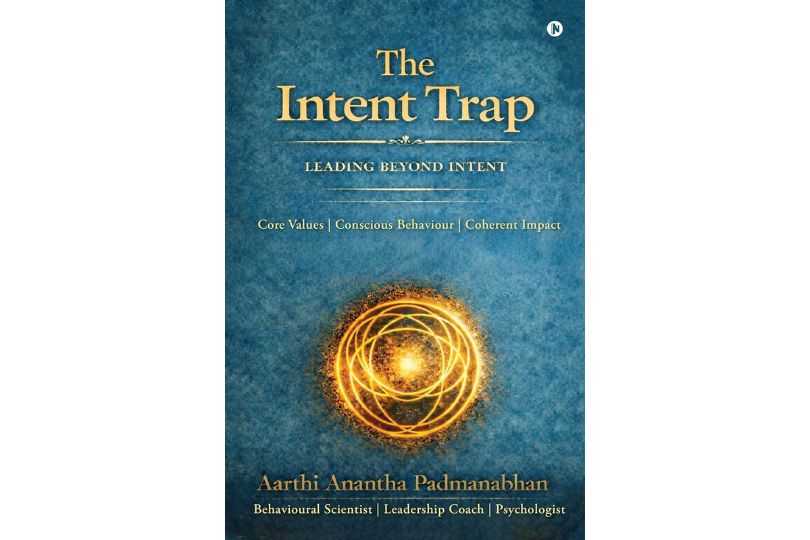
The Intent Trap: Understanding the Gap Between Leadership Intentions and Their Impact
Leadership often begins with good intentions. Leaders want to inspire their teams, build trust, encourage growth, and create meaningful change. Yet, even with the best intentions, their words and actions may not always have the effect they expect. A well-meant suggestion can feel like criticism, guidance can be perceived as control, and an attempt to help can unintentionally create distance. In The Intent Trap, Aarthi Anantha Padmanabhan explores this subtle but consequential gap between what leaders intend and how others experience their behaviour.
Drawing on behavioural science, real leadership conversations, and decades of experience working with people and organisations, Padmanabhan invites readers to examine leadership from a more introspective perspective. Rather than presenting leadership as a collection of techniques to master, the book encourages readers to pay closer attention to their everyday choices, reactions, and interactions. Its central message is both practical and challenging: good intentions matter, but they do not automatically guarantee a positive impact.
Book Summary
The Intent Trap examines a familiar challenge in leadership and human relationships: the difference between what we mean to communicate and what other people actually experience. People tend to understand their actions through their own intentions, values, and circumstances. However, those on the receiving end interpret the same behaviour through their individual experiences, expectations, and perceptions.
For leaders, this difference can have significant consequences. A leader may believe they are being decisive when their team experiences them as dismissive. They may think they are offering constructive feedback while an employee feels discouraged. Similarly, an attempt to protect a team from difficulty may be interpreted as a lack of trust in its abilities.
The book explores why such disconnects occur and how greater awareness can help bridge them. It draws on behavioural science and practical leadership experiences to encourage readers to question their assumptions, recognise the effects of their behaviour, and consider how their values influence the way they lead.
An ancient Gurukul provides the reflective backdrop for the book. Within this setting, stories, conversations, and practical insights create space to examine questions of character, conduct, and self-awareness. This narrative framework supports the book's larger purpose: helping readers understand that meaningful leadership development begins not simply with learning new methods, but with examining the person behind the decisions.
Rather than asking readers to become entirely different leaders, Padmanabhan encourages them to become more conscious of the leaders they already are. The aim is to bring behaviour and impact closer to intention through reflection, understanding, and deliberate action.
What Makes The Intent Trap Different?
1. It Looks Beyond Good Intentions
One of the book's most relevant ideas is that intention and impact are not interchangeable. People frequently evaluate their behaviour according to what they meant to do, while others experience the consequences of what they actually did.
This distinction is particularly important in leadership, where even small interactions can influence confidence, motivation, trust, and workplace culture. A leader's intention to encourage someone may not prevent their words from causing embarrassment. Likewise, a decision made to improve performance may have unintended effects on morale.
By drawing attention to this gap, The Intent Trap challenges readers to look beyond their own explanations and consider the experience of others. It encourages a more complete understanding of responsibility, one that recognises both the reasons behind an action and the impact it creates.
2. It Connects Behavioural Science with Everyday Leadership
Behavioural science can offer valuable insights into why people react, communicate, and make decisions in particular ways. However, these ideas become most useful when readers can recognise them in their own lives.
Padmanabhan brings behavioural science into the context of real leadership conversations and experiences. This approach makes the subject relevant to the everyday situations in which leadership takes place: giving feedback, handling disagreement, responding to mistakes, making decisions, and navigating differences in perspective.
The emphasis is not simply on understanding human behaviour in theory. It is on recognising how behaviour unfolds in practice and how greater awareness can influence the way people work with one another.
3. It Encourages Reflection Rather Than Reinvention
Leadership books often focus on developing new skills, adopting effective strategies, or modelling particular leadership styles. The Intent Trap takes a more introspective approach.
Its emphasis is on understanding existing patterns of behaviour. Rather than suggesting that leaders must adopt a completely new personality, the book asks them to examine how their current habits, assumptions, and values shape their interactions.
This perspective makes leadership development a continuing process of self-awareness. Growth begins with noticing the distance between one's intentions and one's impact, then making thoughtful adjustments where necessary.
Themes Explored in The Intent Trap
The Difference Between Intention and Impact
At the heart of the book lies a distinction that extends beyond professional environments. In families, friendships, teams, and organisations, people often assume that good intentions should be enough to establish understanding. Yet communication is shaped by more than the message a person believes they are sending.
Tone, timing, context, past experiences, and the relationship between individuals can all influence how an interaction is received. Recognising this complexity allows people to approach misunderstandings with greater curiosity and less defensiveness.
For leaders, the lesson is especially significant: explaining what was intended may be part of resolving a misunderstanding, but understanding how the behaviour was experienced is equally important.
Values and Everyday Choices
Leadership values are often expressed through statements about integrity, respect, accountability, and trust. However, values become meaningful through everyday decisions and actions.
The way a leader responds to an uncomfortable question, handles a disagreement, or reacts when something goes wrong can reveal more about their values than formal declarations. The Intent Trap draws attention to this relationship between what people believe and how they behave.
The book's reflective approach encourages readers to consider whether their daily conduct consistently expresses the values they identify with. This examination can help leaders recognise the difference between the person they intend to be and the person others encounter through their actions.
Self-Awareness and Accountability
Self-awareness is essential to leadership because it enables people to recognise their habits, emotional responses, assumptions, and potential blind spots. Without it, even experienced leaders may repeat behaviours that produce unintended consequences.
Accountability extends this awareness further. It involves being willing to examine the effects of one's actions rather than relying exclusively on personal explanations or justifications.
By bringing these ideas together, the book presents leadership as a practice that requires both reflection and responsibility. It encourages readers to approach feedback and differing perspectives as opportunities to learn, rather than automatically treating them as challenges to their intentions.
Communication and Human Connection
Every leadership relationship depends, to some degree, on communication. Yet communication is not merely the exchange of information; it also involves interpretation, emotion, and the experience of being heard or understood.
The gap between intention and impact can become particularly visible in conversations where expectations differ or where one person holds greater authority. A leader may believe a discussion has been straightforward, while another person leaves it feeling unheard.
The book's focus on real conversations makes this theme particularly relevant. By encouraging readers to pay attention to how their behaviour is received, it highlights the role of awareness in building stronger professional relationships and more constructive interactions.
The Gurukul Setting: A Space for Reflection
An ancient Gurukul serves as the reflective backdrop for The Intent Trap, giving the book a setting through which questions of behaviour, values, and personal development can be explored.
The choice of this setting creates an opportunity to consider leadership as more than a professional responsibility. It places self-understanding and conduct within a broader conversation about learning, character, and the relationship between what people believe and how they act.
The book blends stories, conversations, and practical insights rather than relying solely on abstract explanations. This combination supports its reflective purpose, allowing readers to consider leadership questions through human experiences as well as behavioural concepts.
Writing Style and Narrative Appeal
Based on its stated approach, The Intent Trap brings together behavioural science, workplace experience, and reflective storytelling. Its subject is grounded in situations that leaders and professionals are likely to recognise, making its central questions relevant to everyday working relationships.
The Gurukul backdrop adds a contemplative dimension, while the use of conversations and practical insights connects reflection with real-world behaviour. This balance is suited to readers who want to examine not only what effective leadership looks like, but also how their own actions may be experienced by the people around them.
The book's emphasis is less on presenting leadership as a formula and more on encouraging readers to question familiar assumptions. Its value lies in the invitation to pause, observe, and reconsider the relationship between intention and outcome.
About the Author: Aarthi Anantha Padmanabhan
Aarthi Anantha Padmanabhan is a behavioural scientist, psychologist, and leadership coach with more than three decades of experience observing and studying human behaviour. She works with leaders and organisations on behaviour, workplace culture, and the human dimensions of leadership.
Her professional interests include understanding why people react in particular ways, why well-intentioned actions sometimes produce unexpected outcomes, and why individuals can experience the same conversation differently. As a researcher, coach, writer, and observer of human behaviour, she brings these questions together in The Intent Trap.
Her work reflects an interest in the relationship between behavioural science and lived experience. This combination informs the book's examination of leadership, encouraging readers to consider how everyday behaviour shapes the experiences of others.
Who Should Read The Intent Trap?
The Intent Trap will be particularly relevant to:
- Leaders and managers who want to understand how their decisions, communication styles, and everyday behaviour affect their teams.
- HR professionals and organisational development specialists interested in workplace culture, interpersonal dynamics, and leadership effectiveness.
- Leadership coaches and consultants seeking perspectives on self-awareness, behavioural patterns, and the relationship between intention and impact.
- Entrepreneurs and business owners who recognise that organisational culture is shaped by everyday interactions as much as by strategy.
- Professionals at any career stage who want to improve communication, reflect on their behaviour, and understand how others experience their actions.
Although leadership provides the central context, the book's underlying questions extend to personal relationships and everyday interactions. Anyone who has struggled to understand why a well-meant action was received differently than expected may find its central premise worth exploring.
Conclusion
The Intent Trap by Aarthi Anantha Padmanabhan examines an important but often overlooked aspect of leadership: the distance between what people intend and the impact their behaviour creates. Through behavioural science, leadership conversations, stories, and a reflective Gurukul setting, the book invites readers to look more closely at their values, assumptions, and everyday choices.
Its central idea is a useful reminder that leadership cannot be measured by intention alone. What matters is also how decisions are communicated, how behaviour is experienced, and how willing a leader is to learn from the difference.
Rather than promising a quick transformation, The Intent Trap encourages a more considered form of growth - one rooted in awareness, reflection, and accountability. For readers interested in understanding human behaviour and becoming more conscious of their influence on others, it offers a meaningful perspective on what it takes to lead with greater alignment between intention and impact.
Post a comment
0 comments

Trending Posts









Recent Post








Related Post









© 2026 - Frontlist - News and Updates of Publishing Industry, Book Reviews, Education News, Author Interviews, and Videos.. All Rights Reserved.
Sorry! No comment found for this post.