Robotics: The First Guide to Robotics Series
Robotics: The First Guide to Robotics introduces young readers to robotics, engineering, and STEM through engaging, simple, and creative explanations that spark curiosity and innovation.on May 09, 2026
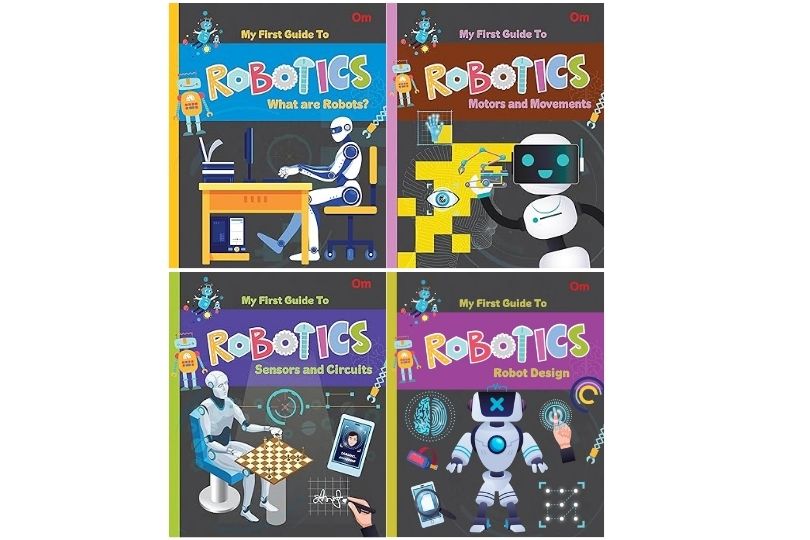
With science, technology, engineering, and mathematics education being more prevalent than ever before among young readers, the Robotics: The First Guide to Robotics series has proven itself as an interesting and insightful guide to robotics and engineering principles. This series is designed specifically for children and novices and provides a good way for children to discover the intricacies of robots through an easily digestible format that explains all about how machines operate.
It uses a progressive learning method, making sure the reader progresses steadily and does not become confused by too much information. Each volume explores a fundamental principle of robotics in a clear, understandable, and interactive manner.
Firstly, Robotics: The First Guide to Robotics What Are Robots? is a great introduction into the topic. It does not start with any sophisticated terminology, but rather with the fundamental question on how a robot differs from a machine or toy. It answers all the questions in a child-friendly way and provides vivid examples to illustrate the difference between a robot and other devices. In addition, the book discusses the basic features of robotics: programming, locomotion, sensors, and autonomy. Children can be interested in different types of robots described in the book – from human-like machines to insect-like robots.
Secondly, Motors and Movements is a fascinating book that teaches young people about robotics through motions. One of the most impressive things in this book is its ability to explain the mechanics in simple language. For example, it talks about the main components of robotics in terms of a rolling robot, a dancing robot, a swimming robot, and a flying machine. Thus, the book makes robotics easier for kids to comprehend. Moreover, the authors discuss how robots resemble living organisms because their movement depends on many factors. They highlight that the main source of inspiration for engineers are animals in nature.
Sensors and Circuits is the third book that emphasizes the "thinking" and "feeling" aspects of robots. This book does an outstanding job in explaining how robots react to stimuli from the world around them. Ideas such as circuits, electricity, sensors, and the signal system can be explained in children-friendly terms with help from comparisons. Camera, for instance, becomes a set of robot eyes while a microphone robot ears, and circuits become highways of information. Such analogies make even quite complicated ideas easy to digest for kids and entertaining at the same time. This book also introduces readers to the world of electronics and automation without even making this obvious.
The final book in the series, Robot Design, is the most interesting because it concentrates on creativity and planning involved in robotics rather than on robots as mechanical creatures. This book explains to young minds why robots look different when used for different purposes and what influence the choice of material, shape, or moving mechanism has on robot's performance. Moreover, the book shows children that engineering requires more than just building a robot; it includes imagination, structure, and solving problems as well. This book inspires little minds to create robots themselves!
The main point of making the entire set so good is that it manages to find a good combination of educational content and readability. The language used throughout the series is very clear but still not dumbed down at all. These books manage to avoid overly complicated technical explanations and still impart valuable knowledge. At the same time, the emphasis on STEM makes this series very valuable in an educational context, for teachers and even parents who want their kids to get curious about science.
What else makes these books valuable? Well, these titles not only teach something, but they actually motivate their young audience to think about what they see. Children who are passionate about technology and inventions will surely appreciate them.
In summary, the Robotics: The First Guide to Robotics series is an outstanding teaching tool for novices. The books contain useful information and are captivating and well-structured enough to expose children to the exciting field of robotics while fostering curiosity, imagination, and critical thinking. Used as textbooks, for STEM education, or for leisure reading, the series creates an excellent platform for future pioneers.
Post a comment
0 comments

Trending Posts
.jpg)
.jpg)



.jpeg)


.jpg)

Recent Post
.jpg)
.jpg)






Related Post







© 2026 - Frontlist - News and Updates of Publishing Industry, Book Reviews, Education News, Author Interviews, and Videos.. All Rights Reserved.
Sorry! No comment found for this post.