IFRRO Study Warns of Generative AI’s Impact on Authors and Publishers
IFRRO press release, “New IFRRO study highlights growing impact of generative AI on authors, publishers and other rightholders.on Oct 30, 2026
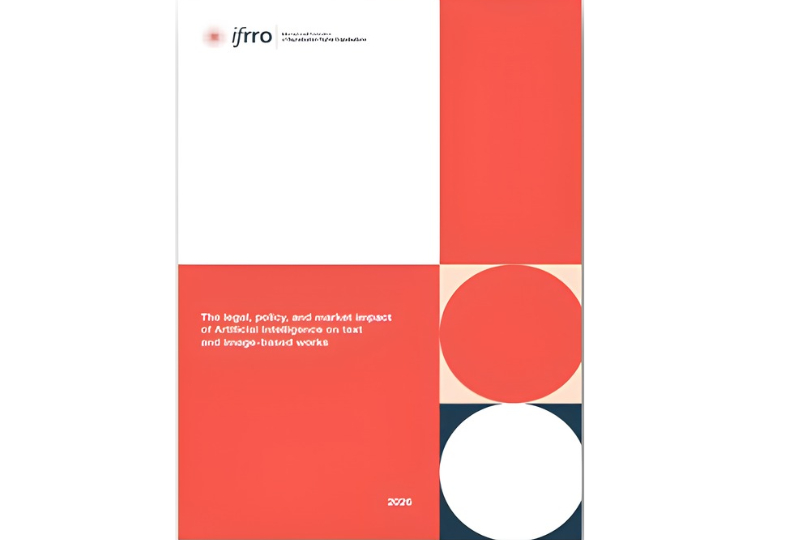
IFRRO Report Warns About Generative AI as Threat to Authors' and Publishers' Income
A recent report from the International Federation of Reproduction Rights Organisations (IFRRO) warns about threats posed to authors and publishers regarding financial consequences and the need for better protection of copyright, licensing and transparency when using creative works because of the development of generative artificial intelligence.
The document called The Legal, Policy, and Market Impact of Artificial Intelligence on Text- and Image-Based Works was released in Brussels on 28 October 2026. The report was prepared in cooperation with Professor Dr Eleonora Rosati. It describes the influence of generative AI on the creative industry from legal and policy perspective, case law, market evidence and an international survey of almost 2,000 people.
Issues of Money and Creative Work Emerge From the Survey
The worldwide survey, carried out from 25 June to 24 July 2026, received feedback from authors, publishers, and Reproduction Rights Organisations (RROs) in all regions of the world via the international membership of IFRRO.
It shows that there is great concern about the impact of generative AI on creative individuals and the existing copyright system.
As per the survey, nearly nine in every ten people agreed that generative AI had impacted the income of rightsholders in a negative way. Almost three-quarters felt that AI would replace creative employees, while all respondents felt that the present system did not provide adequate protection for their interests.
Further, more than 50% of respondents believed that licensing specifically related to AI could help improve their financial situation.
These results show that there are growing worries of creators and publishers about how their works can be used to build an AI and how the economic value generated can be distributed.
Copyright, Licensing and Transparency in the Forefront of Debate
Alongside the results from the survey, this study looks into the role of the notion of harm within existing copyright regimes and the rising importance of the concept in AI-related legal cases and policy-making.
It also highlights the market studies in various creative industries, which show evidence of revenue displacement, as well as a market of licensing protected materials for AI training.
The paper highlights that unauthorized large-scale use of copyrighted material without any consent, transparency, and payment poses serious legal and economic issues. There are three key prerequisites for the sustainable development of generative AI technology which include consent, enforcement of copyright rules, and transparency in both AI learning and output process.
The main conclusions of the study emphasize the importance of licensing in discussing the ways for AI creators to gain access to creative materials.
IFRRO Pushes for a Sustainable AI Ecosystem
“Amongst other things, this report identifies important legal and economic issues arising from the unauthorised exploitation of protected works without consent, payment and transparency,” Anita Huss-Ekerhult, CEO and Secretary General of IFRRO, stated. Huss-Ekerhult also thanked Professor Rosati and the IFRRO members and authors and publishers who have participated in the research.
“The cooperation allowed us to explore the effect that AI has had on the creative industry and artists, and how the challenge could possibly be addressed,” Professor Rosati explained about the research process.
The research follows IFRRO’s earlier initiatives related to copyright and AI, such as the IFRRO AI Advocacy Toolkit and AI Governance Guide. “In general, we believe our objective should be to build an AI ecosystem where technological development and copyright go hand in hand,” the organisation stated.
Webinar on Key Results of the Study
In order to celebrate the report’s publication, IFRRO has planned a webinar on 23 November 2026 at 12:30 – 14:00 CET. Prof. Rosati will introduce the main results of the study, after which there will be a panel discussion moderated by IFRRO membership representatives.
The panel will discuss the implications for authors, publishers and RROs and the importance of licensing in maintaining the sustainability of the AI ecosystem.
IFRRO is a non-profit independent membership organization, providing services for the collective administration of reproduction rights and other rights in text- and image-based works. There are over 160 IFRRO members in about 90 countries, representing millions of authors, visual artists and publishers.
Given the role that generative AI plays in the generation of creative works, this research contributes to the existing discussions on copyright protection, licensing, and the need to ensure a balance between technology and creators' rights.
Post a comment
0 comments

Trending Posts






Recent Post






Related Post








© 2026 - Frontlist - News and Updates of Publishing Industry, Book Reviews, Education News, Author Interviews, and Videos.. All Rights Reserved.
Sorry! No comment found for this post.