From Paperbacks to Pixels: How Reading Habits Are Shifting
Reading isn’t dying it’s evolving. From print to digital and audio, modern readers prioritize convenience, reshaping how books are discovered, consumed, and valued.on Apr 15, 2026
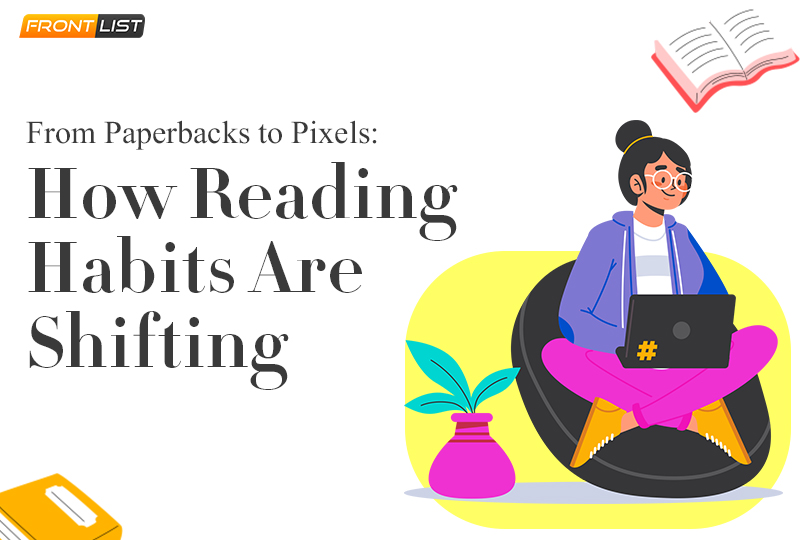
Let’s get one thing straight reading is not dying.
It’s evolving. And faster than the publishing industry is often comfortable admitting. In fact, when we look at the future of reading books, the change is impossible to ignore.
The nostalgic image of a reader curled up with a paperback still exists but it’s no longer the default. Today’s reader is just as likely to be swiping through an e-book at midnight, listening to a novel during a commute, or discovering their next read through a 10-second video.
The shift from paperbacks to pixels isn’t subtle. It’s structural and clearly reflects broader modern reading trends.
The Comfort Myth of Print Dominance
For years, there has been a quiet belief in the industry: print will always lead.
But the data and more importantly, behavior suggests something else.
Readers are no longer loyal to formats. They are loyal to convenience.
If a story is accessible faster on a phone, it will be read there. If it fits better as audio, it will be heard instead of seen. The format is becoming secondary. The experience is everything, especially in the ongoing debate of print vs digital reading.
Digital Isn’t the Enemy It’s the Accelerator
E-books didn’t replace print. They removed friction.
- No waiting.
- No storage limits.
- No geographical barriers.
This has expanded reading access dramatically especially for younger, mobile-first audiences. The impact of technology on reading habits is clear here.
What we’re witnessing is not a decline in reading, but an expansion of it into spaces where print alone couldn’t reach.
Audiobooks Are Rewriting the Definition of Reading
Here’s the uncomfortable question: If you listen to a book, are you still a reader?
Increasingly, the answer is yes.
Audiobooks are not a side format anymore—they are a primary entry point. They fit into modern life seamlessly, turning passive time into productive engagement.
And in doing so, they are quietly reshaping how people read books today.
Attention Spans Haven’t Shrunk Patience Has
Blaming digital platforms for shorter attention spans is easy—and incomplete.
What has actually changed is tolerance for slow engagement.
Readers today will abandon a book faster but they will also obsess over one that grips them. The bar hasn’t lowered. It has risen.
This also explains why people often ask why are people reading less, when in reality, they are just reading differently.
This puts pressure back where it belongs: on storytelling.
Discovery Has Been Democratised
The gatekeepers are gone.
Readers are no longer discovering books primarily through bookstores or traditional reviews. They’re finding them through:
Social media
Reader communities
Influencers and creators
This shift is especially visible in Gen Z reading books, where discovery is driven more by content than by critics.
A single viral moment can do what months of traditional marketing cannot.
Print Isn’t Dead It’s Becoming Premium
Here’s the twist: print isn’t losing value. It’s gaining a new one.
Physical books are no longer just reading tools they are:
Collectibles
Aesthetic objects
Emotional purchases
People may discover digitally, consume in multiple formats, but still buy print for permanence.
Print is not the default anymore. It’s the keepsake.
The Rise of the Hybrid Reader
The modern reader doesn’t choose sides.
They:
Start a book on their phone
Continue it as an audiobook
Buy a physical copy if they love it
This fluid behavior is the new normal. And it demands that publishers stop thinking in silos.
Because readers already have.
The Real Shift: Control Has Moved to the Reader
This is the biggest change and the most important.
Readers now decide:
How they read
When they read
Where they discover content
Not publishers. Not platforms. Not tradition.
The industry is no longer dictating habits. It is reacting to them.
Conclusion: Adapt or Be Ignored
The shift from paperbacks to pixels is not a phase. It’s a permanent evolution.
Clinging to format loyalty is a losing game. Understanding reader behavior is the only way forward.
Because the truth is simple:
Stories are still powerful.
Readers are still hungry.
But the rules of engagement have completely changed.
FAQs
1. Are digital formats replacing traditional books?
No—they are expanding the reading ecosystem. Print, digital, and audio formats now coexist.
2. Why are reading habits shifting so rapidly?
Technology, convenience, and changing lifestyles are driving faster, more flexible consumption patterns.
3. Are audiobooks considered real reading?
Yes. They engage the same storytelling experience, just through a different medium.
4. Why do readers still buy physical books?
For emotional value, collectibility, and a screen-free reading experience.
5. What is the future of reading?
Hybrid consumption where readers move seamlessly between formats based on convenience and context.
Post a comment
0 comments

Trending Posts
.jpg)
.jpg)
.jpeg)

.jpg)

Recent Post
.jpg)
.jpg)



Related Post


.jpg)
.jpg)
.jpg)

 (1).jpg)
.jpg)

© 2026 - Frontlist - News and Updates of Publishing Industry, Book Reviews, Education News, Author Interviews, and Videos.. All Rights Reserved.
Sorry! No comment found for this post.