The Infinity Machine: Demis Hassabis, Deepmind, and the Quest for Superintelligence
A compelling review of The Infinity Machine, exploring Demis Hassabis, DeepMind, and the high-stakes race toward AI superintelligence.on May 23, 2026
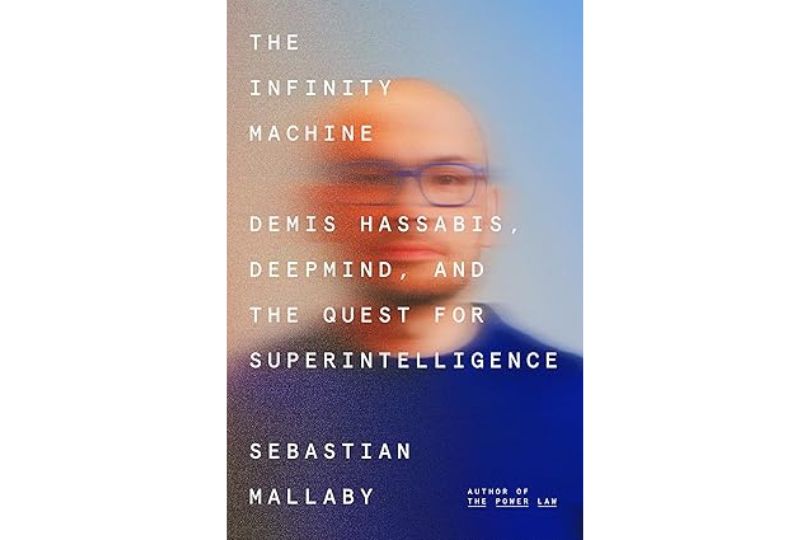
In The Infinity Machine, Sebastian Mallaby crafts an extensively researched and thought-provoking study of Demis Hassabis, the brilliant founder of DeepMind, alongside providing an account of the progress of artificial intelligence from an esoteric branch of science to the most pressing technology of the age. But beyond a typical tech biography, the book offers insight into the realm of obsession, ambition, idealism, and the disturbing ethical challenges associated with the quest for superintelligent machines.
Sebastian Mallaby sees Demis Hassabis not just as a tech innovator, but as a unique individual whose brilliance was tempered by unyielding discipline and sense of purpose. Even before reaching the next page, the author makes it clear that Hassabis is a character larger than life: a young chess champion, a game designer, scientist and finally a pioneer of the modern artificial intelligence revolution. Comparisons between Demis Hassabis and Ender Wiggin of Ender's Game provide significant insight into Hassabis’s psychological make-up and drive to “understand the fabric of reality itself.”
One thing that makes The Infinity Machine particularly fascinating is the author’s capability to combine reverence and critique. There are no doubts regarding Hassabis’s genius. However, the book manages to avoid idolizing the founder of DeepMind as it is based on numerous interviews with his coworkers, competitors, critics, and past associates such as Mustafa Suleyman, Ilya Sutskever, and Geoffrey Hinton. The result is a carefully crafted account of the opportunities and risks associated with the development of artificial intelligence, which reveals how the field in question is being divided by the tension between progress in research, business interests, ethics, and geopolitical considerations.
Regardless of how technical the subject matter is (neural networks, reinforcement learning, protein folding), Mallaby is capable of making it comprehensible for the reader, whose attention he keeps engaged through his skillful combination of a thriller-like plot and solid long-form journalism.
One of the best aspects of this book is the psychological cost of being a genius. The passages that discuss Hassabis's upbringing show this aspect in full effect. With his tough training in chess, his father's unrealistic expectations, and his personal obsession with perfectionism, this shows the psychological process that creates geniuses like him. Throughout the book, there is a recurring theme about how genius could mean self-destruction since great individuals might need to destroy themselves to change the entire world.
Of course, The Infinity Machine is a meditation about AI and the future. The author explores the risks that come from the rapid development of artificial intelligence while discussing the race to create better machines. There is the question of who will control these technologies, as well as the ethics involved. There is also the possibility that humans cannot understand machines at some point, leading to catastrophic consequences.
For those who love science and technology, the book provides valuable information about recent advancements. Those who enjoy biographies will appreciate this story, especially if they have read works like Steve Jobs or The Code. It is a gripping account that explores one of the most exciting periods in modern history.
At the end of the day, what makes this book so special is the understanding that AI isn’t only about technology – it’s also about us humans and our desire to push the boundaries of what we can achieve. And by telling the story of Demis Hassabis and his company DeepMind, Sebastian Mallaby has written one of the most important books about technology of the last ten years.
Post a comment
0 comments

Trending Posts
.jpg)
.jpg)



.jpeg)


.jpg)

Recent Post
.jpg)
.jpg)






Related Post







© 2026 - Frontlist - News and Updates of Publishing Industry, Book Reviews, Education News, Author Interviews, and Videos.. All Rights Reserved.
Sorry! No comment found for this post.