Why Readers Are Turning to Memoirs and Personal Essays
Discover why memoirs and personal essays are gaining popularity among readers. Explore publishing trends, reader psychology, market statistics, and the future of personal storytelling.on Jul 03, 2026
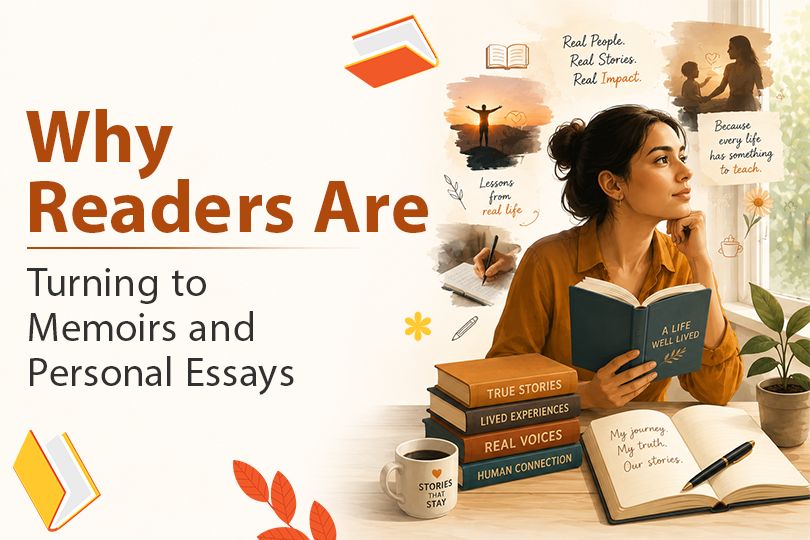
In an Age of AI and Information Overload, Readers Are Seeking Authentic Human Stories
The publishing industry is experiencing a truly phenomenal change. As the genres of fantasy, thriller, and romance keep topping the list of best sellers, memoirs and personal essays have secretly managed to establish themselves as some of the most rapidly developing forms of non-fiction. Today's reader doesn't just crave for entertainment—they want to read something real, something that touches.
From celebrity confessions, to the extraordinary lives of ordinary people, from essays about daily experiences to the most shocking memoirs—personal stories have truly become very relevant in today's digital environment.
But why do modern readers find memoirs so appealing?
Let us see.
What Are Memoirs and Personal Essays?
Memoir is a form of non-fiction writing that revolves around an author’s own experiences, generally about a certain time period, relationship, struggle, or life lesson instead of their whole life.
Personal essays are relatively short and discuss one experience, idea, or observation.
While autobiographies tell the story of someone’s life from beginning to end, memoirs are more concerned with emotional truth than chronological order.
Why Readers Are Choosing Memoirs More Than Ever
The reasons behind the success of recently released memoirs reveal the factors that make people prefer memoirs to other literary genres. For instance, a reader of Becoming by Michelle Obama will be able to learn about issues related to identity, leadership, and self-discovery, whereas a reader of When Breath Becomes Air by Paul Kalanithi will be able to reflect on death, purpose, and humanity.
1. Authenticity Feels More Valuable Than Perfection
Social media often showcases carefully curated lives. Readers increasingly crave stories that reveal vulnerability instead of perfection.
Memoirs provide:
- Honest emotions
- Real-life failures
- Mental health struggles
- Family dynamics
- Identity journeys
- Career setbacks
- Personal victories
These stories remind readers they are not alone.
2. Mental Health Conversations Have Become Mainstream
Over the last decade, conversations around anxiety, depression, grief, trauma, burnout, and healing have become more open.
Readers are actively searching for books that help them understand both themselves and others.
Memoirs discussing emotional resilience often offer:
- Comfort
- Validation
- Hope
- Practical life lessons
This emotional connection makes them memorable long after the final page.
3. Readers Want Human Connection in the AI Era
Artificial intelligence can generate content quickly, but lived experiences remain uniquely human.
Personal essays capture:
- Nuance
- Imperfection
- Vulnerability
- Memory
- Emotion
These qualities cannot simply be manufactured—they come from genuine experience.
As AI-generated content becomes more common, authentic voices become even more valuable.
4. Diverse Voices Are Finally Being Heard
Modern publishing is embracing stories from communities that were historically underrepresented.
Readers now have access to memoirs exploring:
- Disability
- Immigration
- LGBTQ+ experiences
- Indigenous identities
- Women's perspectives
- Cultural heritage
- First-generation families
These stories broaden perspectives while fostering empathy.
5. Memoirs Inspire Personal Growth
Unlike traditional self-help books, memoirs teach through experience rather than instruction.
Readers often find themselves thinking:
- "I've experienced something similar."
- "If they overcame this, maybe I can too."
- "This gives me hope."
Learning through storytelling often feels more relatable than direct advice.
The Rise of Celebrity Memoirs
Celebrity memoirs continue to dominate publishing because audiences are interested in the stories behind public personas.
Rather than focusing solely on fame, many modern memoirs explore:
- Childhood
- Failure
- Addiction
- Relationships
- Creativity
- Mental health
- Reinvention
This shift has made celebrity memoirs more emotionally engaging than ever before.
Why Personal Essays Thrive in the Digital Age
The popularity of newsletters, literary magazines, blogs, and platforms dedicated to long-form writing has created a strong audience for personal essays.
Readers appreciate essays because they are:
- Easy to consume
- Emotionally impactful
- Thought-provoking
- Highly shareable
Many bestselling memoirists first built audiences through essay writing before publishing books.
Statistics That Show the Growing Popularity of Memoirs
The publishing industry's data reflects readers' increasing interest in personal storytelling.
Key Statistics
- Around 30% of adult nonfiction book sales globally are driven by memoirs, biographies, and autobiographies.
- The global book publishing market is projected to exceed USD 170 billion by 2030, with nonfiction continuing to be a significant growth segment.
- Sales of books centered on mental health, resilience, and personal growth have risen steadily over the past five years.
- Digital reading platforms report strong engagement with essay collections and narrative nonfiction, particularly among younger readers.
- Gen Z and Millennials consistently rank authenticity as one of the most important qualities they seek in books and creators.
Why Publishers Are Investing More in Memoirs
Publishers recognize that memoirs often generate strong media attention and long-term readership.
Benefits include:
- Cross-platform marketing opportunities
- Podcast interviews
- Festival appearances
- Book club selections
- Adaptations for film and streaming
- Strong word-of-mouth recommendations
A compelling memoir can remain relevant for years because its themes are timeless.
What Makes a Great Memoir?
Successful memoirs typically include:
- Emotional honesty
- A clear narrative arc
- Memorable storytelling
- Reflection rather than simple recollection
- Universal themes
- Authentic voice
Readers connect most with stories that reveal vulnerability while offering meaning.
The Future of Personal Storytelling
The changing face of technology will undoubtedly change the publishing world, but people will always be in search of human experience.
Personal memoirs and essays will continue to be among the best nonfiction genres in the business, for it fills an ageless desire: the quest for self-discovery through other people’s stories.
Whether penned by popular authors or amateurs, the genre is a reminder that there are stories worth telling in everyone’s lives.
Conclusion
This trend towards autobiographical literature represents the larger cultural movement towards authenticity, compassion, and storytelling. In an age of fast facts and cluttered information, readers are looking for more from their books than just perfection.
As writers, there is a rare chance to make your own life experience into something that moves others, heals others, and reaches out to the world at large. As publishers, memoirs are always a strong genre in the market. Personal stories are going to be one of the strongest movements in the future of publishing.
Frequently Asked Questions (FAQs)
1. Why are memoirs becoming more popular?
Memoirs have gained popularity because readers increasingly seek authentic, emotionally honest stories that explore real-life experiences, resilience, identity, and personal growth.
2. What is the difference between a memoir and an autobiography?
A memoir focuses on a specific period, theme, or experience in an author's life, while an autobiography covers the author's life chronologically from beginning to end.
3. Why do readers enjoy personal essays?
Personal essays offer concise, reflective narratives that provide emotional insight, relatable experiences, and fresh perspectives on everyday life.
4. Are memoirs considered nonfiction?
Yes. Memoirs are a form of nonfiction based on the author's lived experiences, although they often employ literary storytelling techniques.
5. Will memoirs continue to grow in popularity?
Industry trends suggest memoirs will remain a strong publishing category as readers continue to prioritize authenticity, diverse voices, and emotionally resonant storytelling.
Frontlist Media
Blog
Memoirs
Personal Essays
nonfiction
publishing industry
Book Trends
Literary Fiction
Storytelling
Post a comment
0 comments

Trending Posts
.jpg)
.jpg)


.jpeg)

.jpg)

Recent Post

.jpg)
.jpg)
.jpg)



Related Post

.jpg)
.jpg)
.jpg)

 (1).jpg)
.jpg)

© 2026 - Frontlist - News and Updates of Publishing Industry, Book Reviews, Education News, Author Interviews, and Videos.. All Rights Reserved.
Sorry! No comment found for this post.